

Article Summary
Sites rarely fail over exotic engineering. They fail over an open bung, a solvent-etched label, three inches of rainwater in a containment sump, and a log with blank weeks. Seven areas decide the result: container integrity, labels, segregation, secondary containment, ventilation and ignition control, documentation, and emergency equipment. Anyone who wants to know how to pass a hazmat storage inspection should work them in that order the week before the walkthrough.
How to Pass a Hazmat Storage Inspection: What Inspectors Check

Authority depends on what sits in the room. OSHA covers worker exposure under the flammable liquids standard (29 CFR 1910.106) and hazard communication (29 CFR 1910.1200). EPA’s RCRA program governs hazardous waste accumulation areas. The local fire marshal enforces the adopted fire code and NFPA 30 quantity and separation limits.
| Authority | Governs | Key Rule |
|---|---|---|
| OSHA | Worker exposure | 29 CFR 1910.106 (flammable liquids), 29 CFR 1910.1200 (hazard communication) |
| EPA (RCRA) | Hazardous waste accumulation | 40 CFR 262 |
| Local fire marshal | Fire code compliance, quantity and separation limits | Adopted fire code, NFPA 30 |
| State/local unified program agency (where applicable) | Consolidated hazmat business plan and waste generator inspections | Varies by state, see fix 3 below |
Two categories, two rulebooks. Product in a hazmat storage container waits for use. Waste in an accumulation area runs on a clock, with marks and logs attached to it. Sites that treat both the same collect their citations on the waste side.
Which Generator Category Are You?
The waste-side clock isn’t the same for everyone. EPA sorts hazardous waste generators into three categories by how much they produce in a calendar month, and the category sets the accumulation time limit an inspector will check first.
| Category | Monthly Waste Generated | Accumulation Time Limit | On-Site Quantity Cap |
|---|---|---|---|
| VSQG (Very Small Quantity Generator) | 100 kg or less | No federal time limit under normal conditions | Generally capped well below LQG levels, confirm the current figure against 40 CFR 262.14 |
| SQG (Small Quantity Generator) | More than 100 kg, less than 1,000 kg | 180 days, or 270 days if the waste travels 200+ miles to a disposal facility | 6,000 kg |
| LQG (Large Quantity Generator) | 1,000 kg or more, or more than 1 kg of acute hazardous waste | 90 days, with a possible 30-day extension for unforeseen circumstances | No cap |
Generator status isn’t a fixed label. A site can be an SQG one month and an LQG the next if waste volume spikes, and the stricter category’s rules apply for that month. Miss the accumulation deadline and the exemption from storage-facility permitting requirements doesn’t just lapse quietly, the area can be treated as unpermitted storage, a different legal category entirely.
Confirm your status before the walkthrough, not during it. If you don’t know which category applies, that’s the first thing to establish, everything else in this guide downstream of the waste side depends on it.
Container Integrity and Closure
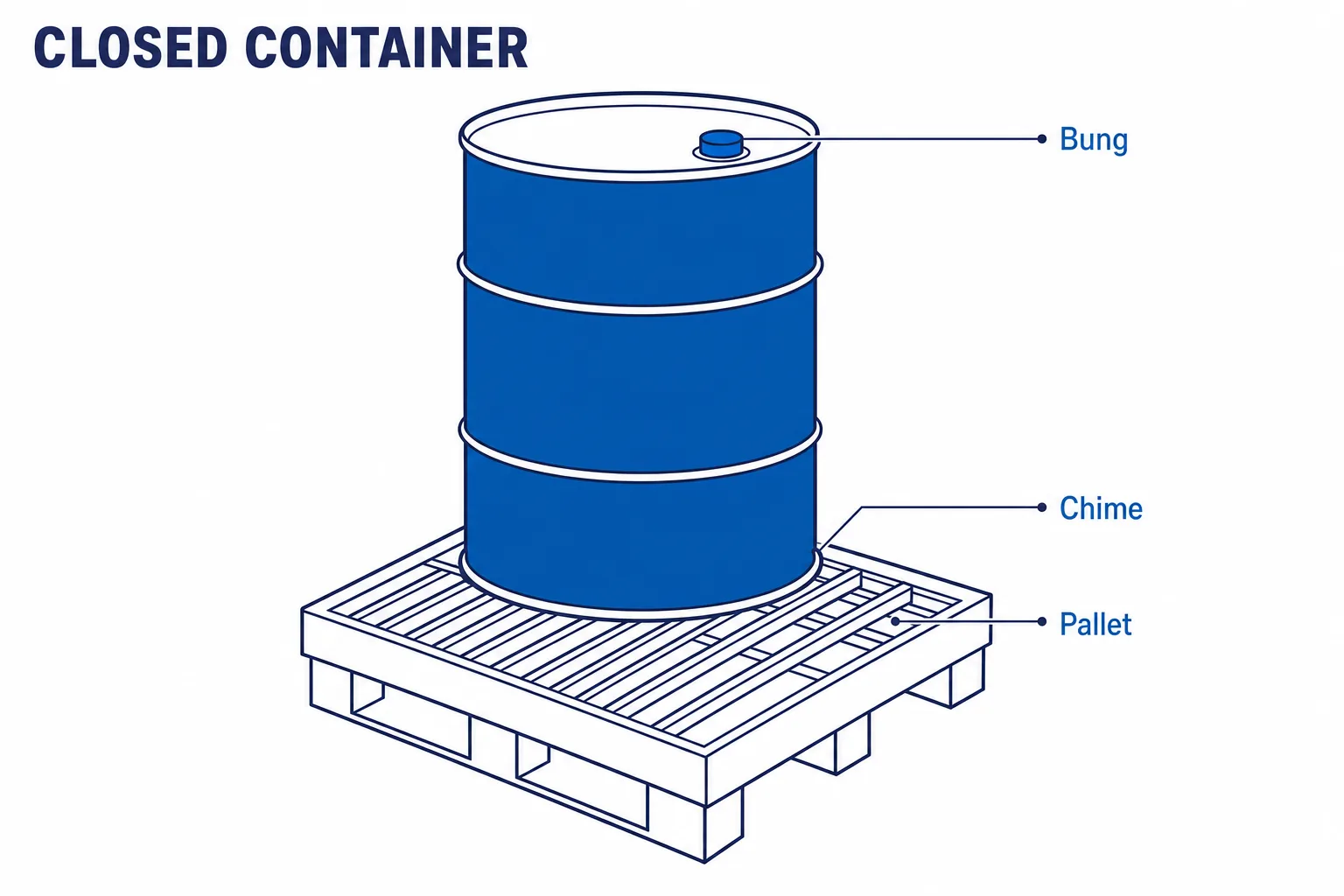
Walk the drums, totes, and bottles with a flashlight. Rust at the chime, dents, bulged sidewalls, crystal growth around a cap, and stained exteriors are findings before anyone opens a binder.
Closure is the most reliable citation on any site. EPA states that containers in satellite accumulation areas must be closed except when waste goes in or out, or when temporary venting is necessary under certain conditions, per EPA’s frequent questions on hazardous waste generation. An open funnel parked in a drum throat defeats that rule in plain sight.
A floor drain is not a disposal path.
Rinsate from container washouts and decontamination is a regulated stream of its own. Collect it, mark it, store it like any other waste. Keep containers off the slab on pallets or grating so a leak shows early, and move a compromised drum into an overpack rather than under a patch.
Labels That Survive Scrutiny
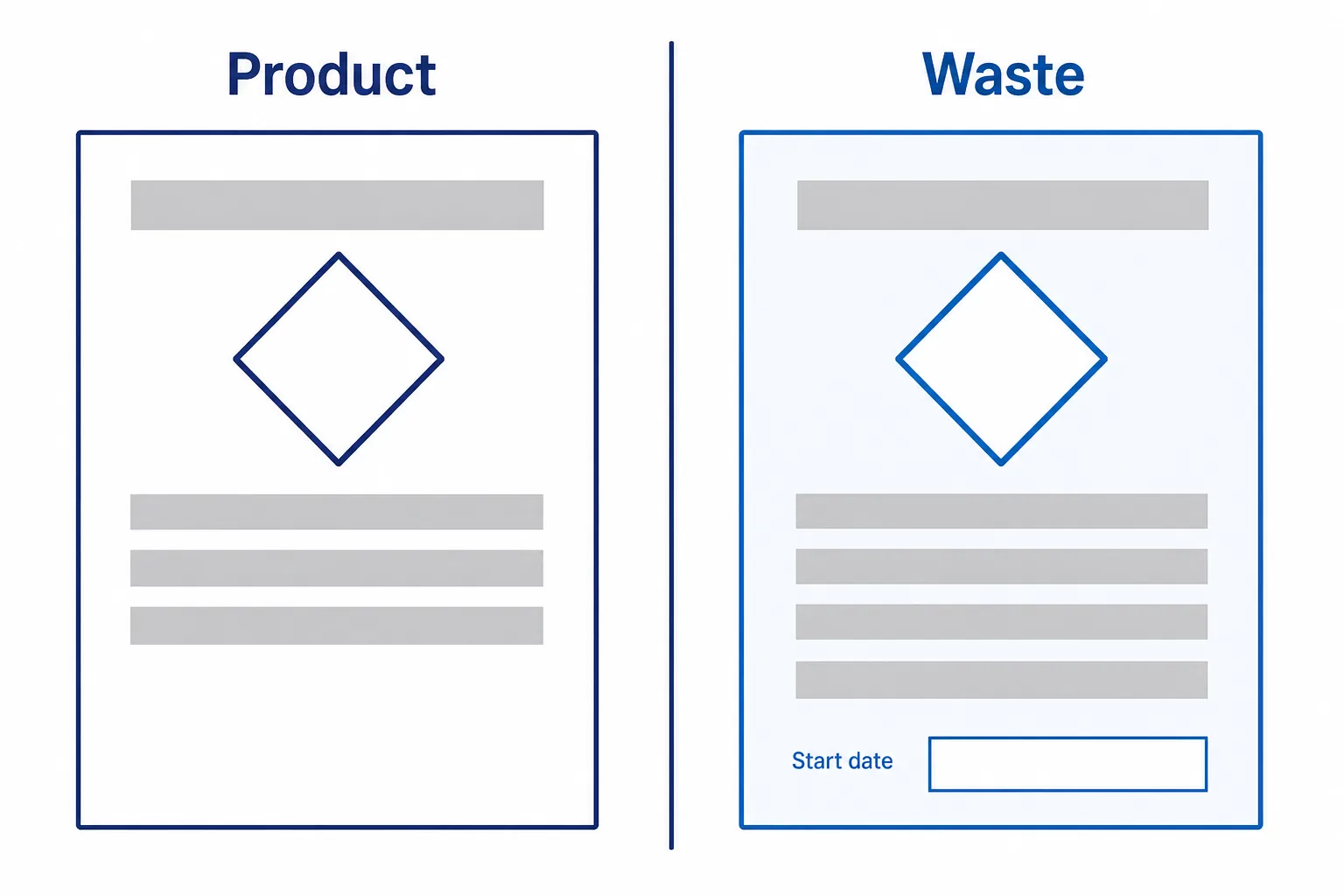
GHS labels need the product identifier, signal word, pictograms, and hazard and precautionary statements, all legible from a normal standoff distance.
Waste containers carry more. Under 40 CFR 262.17, a large quantity generator must mark its containers with the words “Hazardous Waste” and an indication of the hazards of the contents. Inspectors also look for the accumulation start date and compare it against your log.
Secondary containers at the bench still need identification. Faded labels get replaced before the inspection, not during it.
Segregation of Incompatible Chemicals
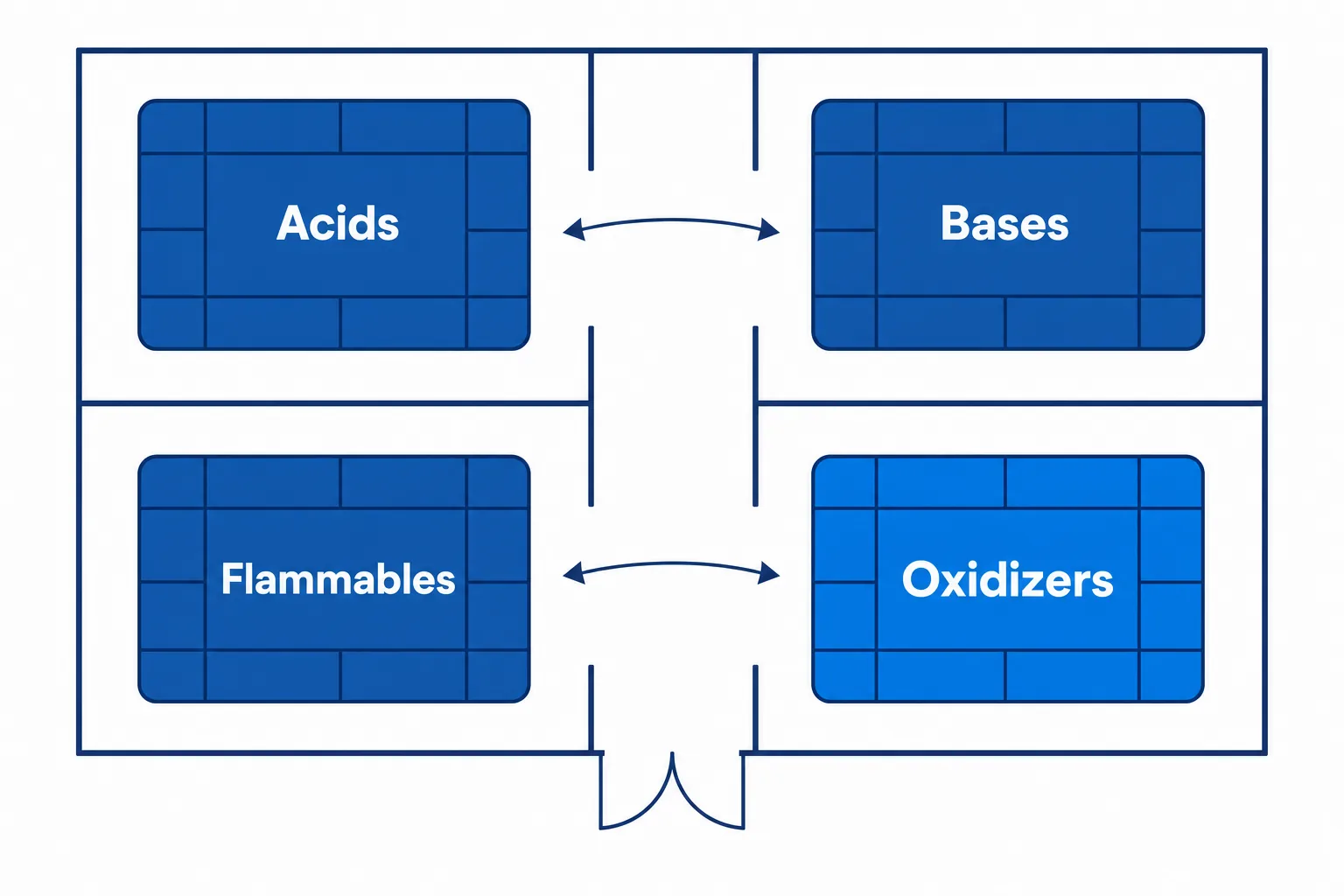
Acids away from bases. Oxidizers away from flammables and organics. Cyanides and sulfides away from acids. Water-reactives away from wet areas, safety showers, and roof drains.
Alphabetical shelves are how incompatibles end up adjacent. Group by hazard class with a physical barrier or real distance between groups. Corrosives sit low, below eye level. Aisles and exit paths stay clear.
Four rules cover most of the risk: segregate by compatibility, contain what can leak, label every container, and control ignition sources and access. Sites that outgrow a cabinet face the chemical storage locker versus storage building decision sooner than they expect, because hazmat storage buildings solve segregation with separate compartments rather than shelf position.
Secondary Containment and Sump Capacity
Code practice sizes containment for the largest container in the area, plus freeboard for precipitation where storage sits outdoors.
Sumps stay clean, dry, and free of product, debris, and rainwater. A sump used as a shelf has no capacity left. Ramps and door thresholds cannot give a spill an escape path, and stock stacked above the containment lip defeats the dike it sits in.
Ventilation, Ignition Control, and Building Systems
Mechanical ventilation should run with intakes and exhausts unobstructed. Where flammable vapors are credible, fixtures need to be explosion-proof or intrinsically safe, and every transfer needs the container bonded and grounded.
Crowded sites hit separation-distance limits fast. Fire-rated storage buildings and an NFPA-compliant storage building reclaim yard space that pure distance cannot, and blast-resistant buildings shield occupied space sited near a process hazard.
Building systems drift quietly. Fans, fire dampers, sump seals, and door hardware on hazardous material storage buildings age out of spec between audits, so an onsite inspection and maintenance field service visit ahead of a regulatory walkthrough costs less than a corrective action after one.
Documentation, SDS, and Inspection Records
Safety data sheets for products employees may be exposed to must be readily available to those employees so they stay informed about the hazards in their work area, as this hazard communication SDS guidance explains. Electronic access counts when a backup covers a power loss.
Keep the written hazard communication program and training records beside the SDS. Add dated inspection logs with corrective actions closed out, plus a container inventory with quantities, so threshold questions get answered on the spot. Rules move: recent hazmat storage compliance updates cover accumulation-period requirements for large quantity generators.
Emergency Equipment and Spill Response
OSHA’s standard at 29 CFR 1910.151(c) specifies that where the eyes or body of any person may be exposed to injurious corrosive materials, suitable facilities for quick drenching or flushing must be provided, as summarized in this OSHA interpretation on eyewash and shower facilities. Flush the unit on schedule, log it, and keep the path clear.
Extinguishers need the right class, a current tag, and clear access. Spill kits need absorbents compatible with what you store. PPE sits near the point of use and gets checked before each use, with damaged items pulled from service.
How to Pass a Hazmat Storage Inspection in Seven Days:
| Day | Task |
|---|---|
| 1-2 | Inventory reconciliation and a container walk-down |
| 3 | Label repairs and segregation corrections |
| 4 | Sump cleanout and drainage check |
| 5 | Ventilation, bonding, and electrical fixture verification |
| 6 | SDS access, logs, and training files |
| 7 | Emergency equipment function test, then a mock walkthrough led by someone from outside that area |
Common Failure Points Worth a Second Look
| Failure point | Why it gets cited | Quick fix |
|---|---|---|
| Open funnel in a waste drum | Container not closed | Latching funnel or solid bung between transfers |
| Undated accumulation container | No proof of the accumulation clock | Date it at the first drop |
| Blocked eyewash | Not immediately usable | Clear and mark the floor space |
| Rainwater in an outdoor sump | Containment capacity consumed | Pump out, document the discharge decision |
| Stock above the containment lip | Spill escapes the dike | Restack inside the pallet footprint |
Volume reduction is the angle most checklists skip. Fewer open containers in an accumulation area mean fewer closure findings and less floor area under containment. Compaction equipment built for this duty uses NEMA 7 explosion-proof components, HEPA and VOC filtration, and stainless steel platens and chambers that tolerate decontamination, which matters when the compacted stream is hazardous or low-level radioactive.
Frequently Asked Questions
Related readingPrefabricated vs Custom Hazmat Storage Building GuideRead the guide →Frequently asked questions
How often must hazardous waste storage be inspected?
What are four important rules to follow when storing chemicals?
Is the hazmat endorsement test the same as a storage inspection?
Is there a weight limit for hazardous materials before special permits apply?
The Takeaway
An inspection-ready site is one that inspects itself. From an engineering perspective, the sites that pass without drama designed the recurring problems out: compartmented safety storage buildings instead of shelf-position segregation, sealed containment sumps instead of drip trays, and fewer open containers instead of tighter discipline around more of them.