

A uni-directional vs bi-directional fire rating comes down to one question: which side of the barrier was tested to resist fire. Uni-directional protection is proven from a single side; bi-directional protection is certified from both. For a hazmat storage building, that direction decides where the enclosure actually holds back a fire, and the right choice depends on whether the threat comes from inside, outside, or both.
What “Fire Rating Direction” Actually Means
A fire rating states how long a barrier resists fire before failure, expressed as a duration such as 2-hour or 4-hour. Direction is a separate property. It tells you which face of the wall or door assembly was exposed to the furnace during certification testing.
The distinction matters because heat flow and flame spread are not symmetrical. Fire behavior is measured under controlled, directional conditions, the kind of instrumented testing detailed in a NIST study on flow measurement in large fire experiments. A wall proven from one face has not been proven from the other.
Uni-Directional vs Bi-Directional Fire Rating: The Core Difference
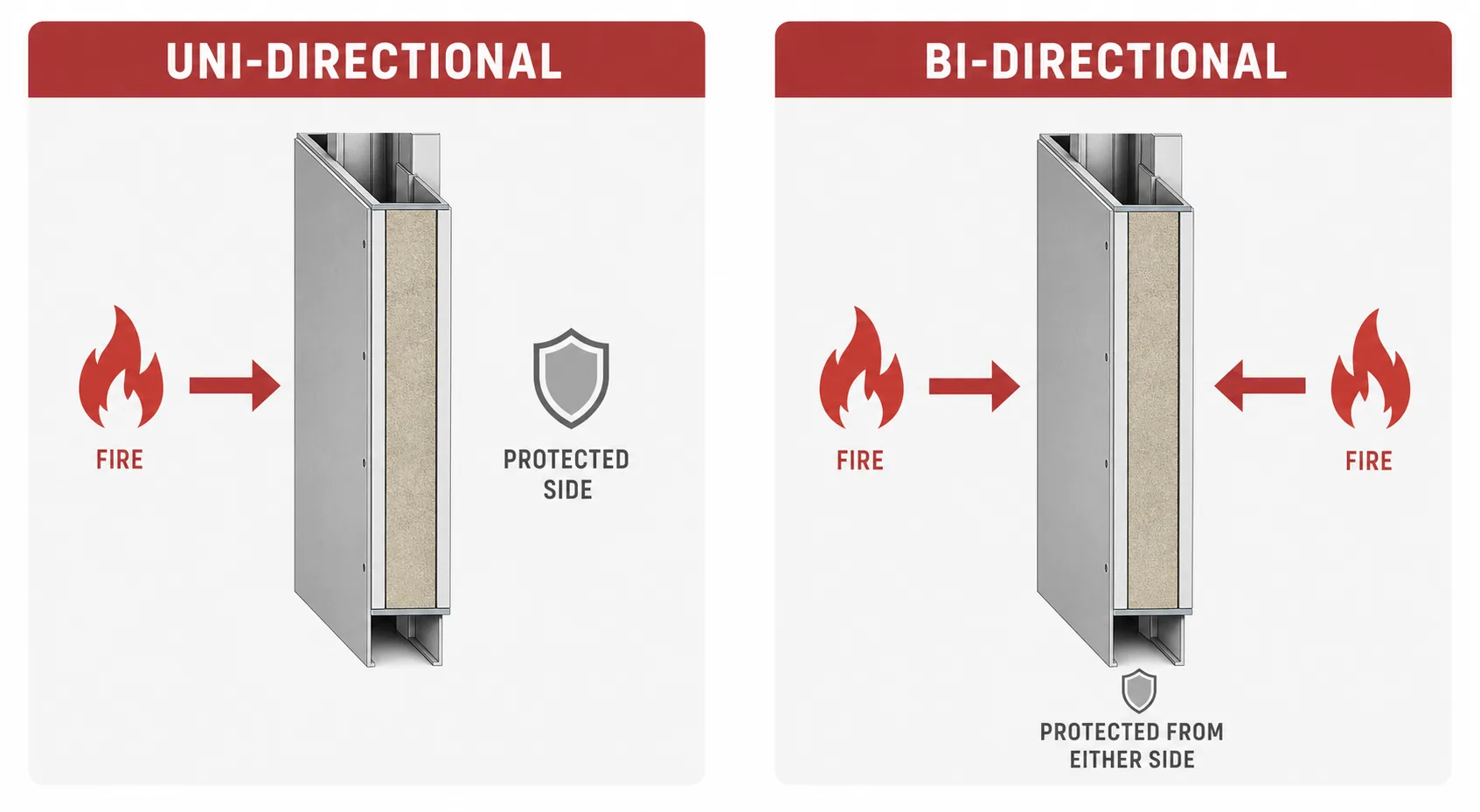
A uni-directional rating certifies resistance from one side only. It typically protects surroundings from an internal fire, or shields contents from an external fire, but not both at a verified level.
A bi-directional rating is tested and certified from both sides, so protection is symmetrical no matter where the fire starts.
| Attribute | Uni-Directional | Bi-Directional |
|---|---|---|
| Tested sides | One face | Both faces |
| Typical protection goal | Contain an internal fire, or shield from an external one | Contain and shield in either direction |
| Best-fit scenario | Threat direction is known and fixed | Threat is credible from inside and outside |
| Relative cost and complexity | Lower | Higher |
| Common ratings | 2-hour | 2-hour, 4-hour |
For sites where the hazard clearly runs one way, 2-hour uni-directional fire-rated hazardous storage buildings can be the efficient specification.
Why Bi-Directional Fire Rating Matters
A real fire can start inside a drum store or outside near an adjacent process. A barrier tested from only one face leaves the opposite direction assumed rather than verified. Fire threat and movement inside enclosed spaces run both ways, a dynamic examined in a peer-reviewed study on bidirectional evacuation in subway fires. Bi-directional certification removes that blind spot.
A barrier tested from only one face leaves the opposite direction assumed rather than verified.
Is BS 8214 Still Valid?
Yes, BS 8214 remains current, but it is often misread. It is a code of practice for installing timber-based fire door assemblies, not a fire-rating test standard. It guides correct fitting; it does not itself certify performance or direction. Rated performance comes from test standards such as BS 476 or EN 1634.
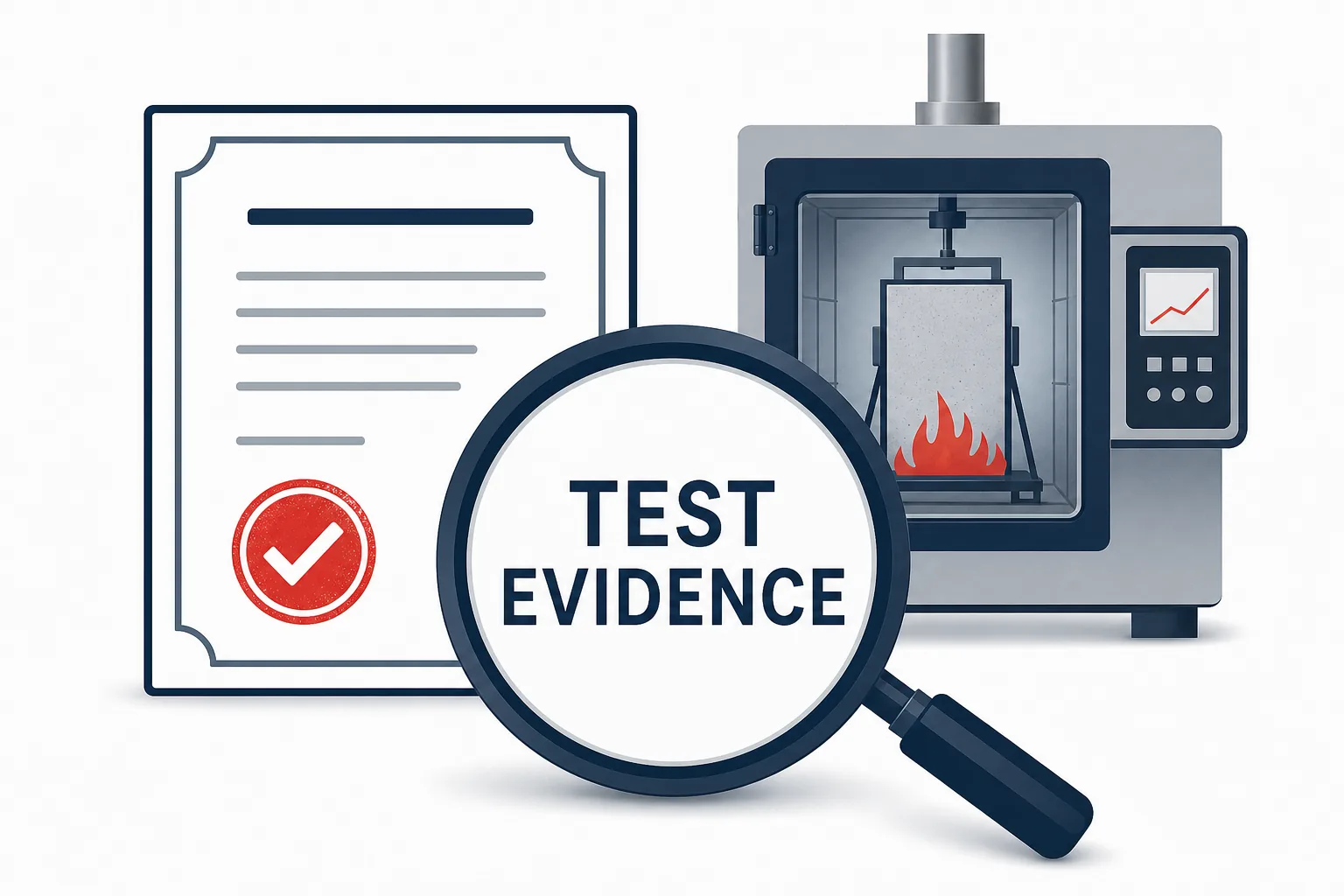
The practical takeaway for buyers: ask for test evidence and certification, not just a referenced standard. Reliable detection and verification of fire performance remain active engineering problems, as ongoing video-based fire-detection research shows, so paperwork should trace back to actual tests.
Choosing a Rating for Hazardous-Material Storage
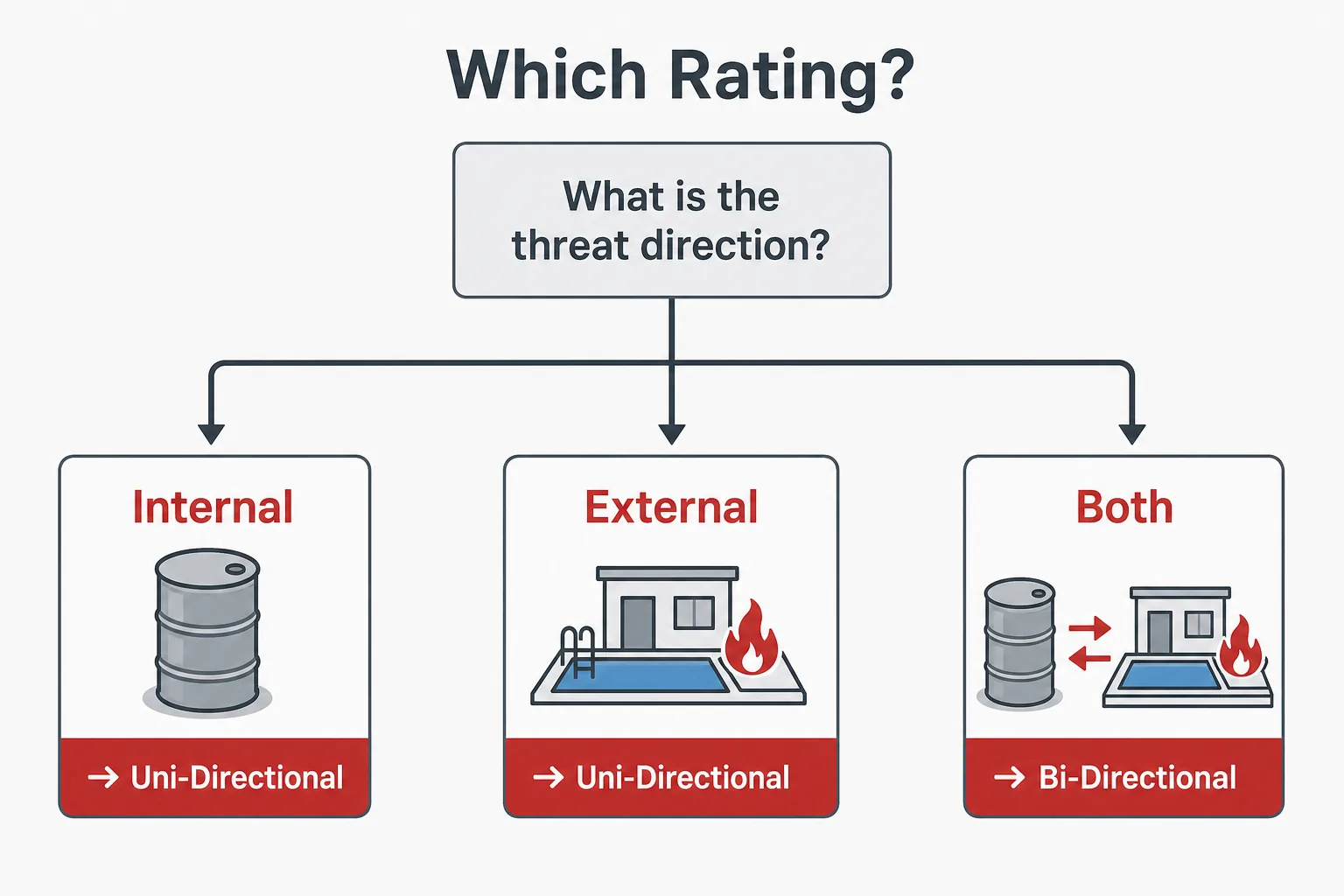
Match the rating to the dominant threat.
- Internal threat dominant: flammable contents or drum storage inside the enclosure means the priority is protecting surroundings. Uni-directional can suffice.
- External threat dominant: a nearby process, pool fire, or adjacent structure means the priority is protecting contents.
- Both credible: bi-directional is the defensible specification.
This logic applies across fire-rated storage buildings, hazmat storage containers, and modular buildings for secure storage of sensitive materials. Containment behavior inside enclosed layouts follows the same directional reasoning studied in work on bi-directional flow in corridors. When the threat runs both ways, 2-hour bi-directional fire-rated hazardous material storage buildings give symmetrical, tested protection.
When 2-Hour vs 4-Hour Matters
Direction and duration are independent specs. Direction says where protection is proven; duration says how long it lasts. Higher-hazard media or longer emergency-response times push a site toward 4-hour ratings, and some high-risk applications pair fire resistance with blast-resistant buildings for hazardous materials storage. For the toughest profiles, 4-hour bi-directional fire-rated hazardous material storage buildings extend both the direction and the duration of protection.
Frequently asked questions
What is the difference between uni-directional and bi-directional fire rating?
Is BS 8214 still valid?
Do I need a bi-directional rating for a hazmat storage building?
Does fire-rating direction affect the 2-hour vs 4-hour choice?
Closing Takeaway
Direction is about where protection is proven; duration is about how long it holds. For hazardous-material storage where fire could come from either side, a certified bi-directional building removes the guesswork and gives you documented performance instead of an assumption. When you specify an enclosure, ask for the test evidence that backs the rating on every face that matters.