

A used hazmat storage building for sale is almost always a one-off asset: fixed footprint, fixed fire rating, fixed electrical classification, no spec changes. Supply comes from plant closures, decommissioned paint kitchens, lab consolidations, and surplus liquidation channels.
The listed price is only part of the number. Freight, rigging, decontamination, and fresh permit review at the destination site decide whether the discount survives.
Where Used Hazmat Storage Buildings Get Listed
Four channels carry most inventory:
- Industrial surplus and liquidation marketplaces. Stock turns over weekly and sells as-is, with no warranty and no seller support after pickup.
- Used equipment aggregator platforms. These index hazmat storage containers and safety enclosures next to general machinery. A small hazardous material locker for a few drums sits beside a full hazmat storage container shell, and much of the listing pool is new stock, so filter hard on “used” or “pre-owned.”
- Auction houses tied to facility closures. Chemical plants, refineries, and pharmaceutical sites release fire-rated storage buildings when a line shuts down.
- Regional riggers and used-equipment dealers. They take trade-ins on hazardous material storage buildings and often hold units on their own yard, which makes an in-person inspection realistic.
Plant-to-plant transfers inside a corporate network never get advertised. Ask your own EHS group before you shop outside.
Why Buyers Look for a Used Hazmat Storage Building for Sale
Capital pressure drives most of it. A pre-owned unit trades below new fabrication cost, and a shell already sitting on a yard ships faster than a build slot opens.
Short-duration needs also favor used: a remediation job, temporary rinsate collection, interim storage during a plant retrofit. The trade-off is blunt. You buy another operator’s specification. Compare any find against current prefabricated hazardous material storage buildings so you know what you give up.
What Drives Price on a Pre-Owned Unit
As CSB Chairperson Steve Owens has emphasized in the context of chemical storage:
> “This is a stark reminder of the very serious dangers that can occur when enormous amounts of reactive and corrosive chemicals are stored without proper safeguards in place.”
| Attribute | Effect on value |
|---|---|
| 2-hour or 4-hour fire rating | Holds value; non-rated units discount steeply |
| Explosion-proof HVAC, heat, lights | Large share of original and residual cost |
| Containment sump condition | Pitting or prior chemical attack kills the deal |
| Footprint and width | Wide units trigger permit loads and crane fees |
| Intact nameplate and approval label | Separates a compliant asset from scrap steel |
Blast resistant buildings rarely surface used, and the site-specific analysis behind blast proof buildings seldom transfers with the asset.
Freight and crane cost scales with weight and width, and on a wide unit it can rival the purchase price.
Compliance Checks That Make or Break the Purchase
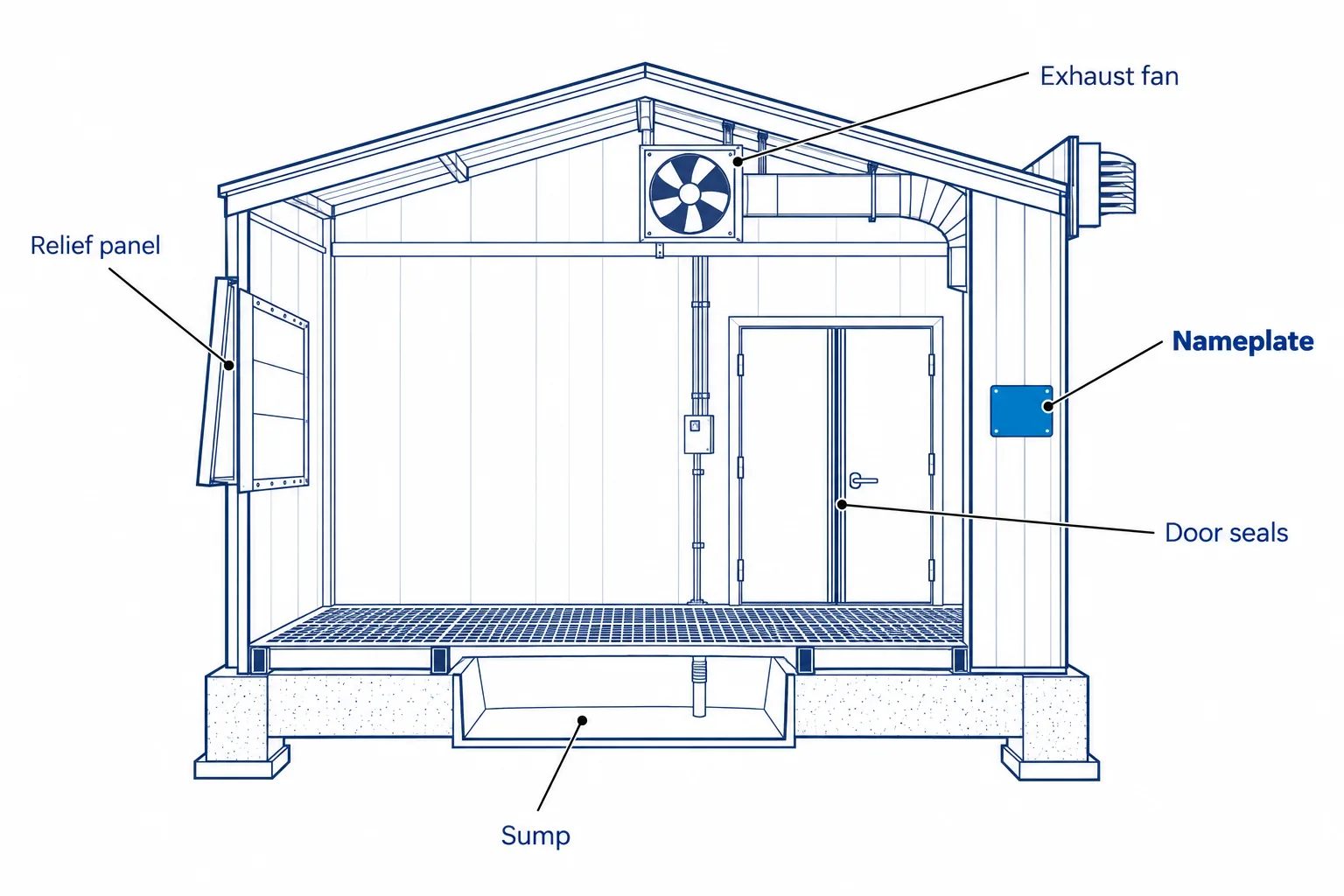
Age alone does not decide compliance. Documentation does. Confirm the data nameplate and third-party fire approval label are intact and legible; a missing label is the largest hidden liability on a used purchase.
Read NFPA 30 and the OSHA flammable liquids standard at 29 CFR 1910.106 against the exact chemicals you plan to store. Confirm exhaust capacity and electrical area classification match your inventory, not the previous owner’s. Fire marshal or AHJ approval attaches to a site rather than a structure, so budget for fresh review wherever the unit lands.
As former Board Member of the U.S. Chemical Safety and Hazard Investigation Board, William B. Wark explains:
> “Most of these accidents are readily preventable with better hazard assessments, proper gas monitoring, and other straightforward safety measures.”
Inspection Checklist Before You Buy a Used Hazmat Storage Building
- Sump and floor: pitting, weld seam corrosion, residue, pooled liquid
- Envelope: panel delamination, saturated insulation, roof penetrations, failed sealant
- Doors: seal compression, panic hardware function, hinge alignment
- Mechanical: exhaust fan amp draw, explosion relief panel, heater and thermostat function
- Electrical: conduit seals, bonding and grounding lugs, junction box integrity
- History: chemicals stored, residue or rinsate left behind, decontamination records
- Photos of the underside and lift points before any freight quote
Costs That Land After Delivery
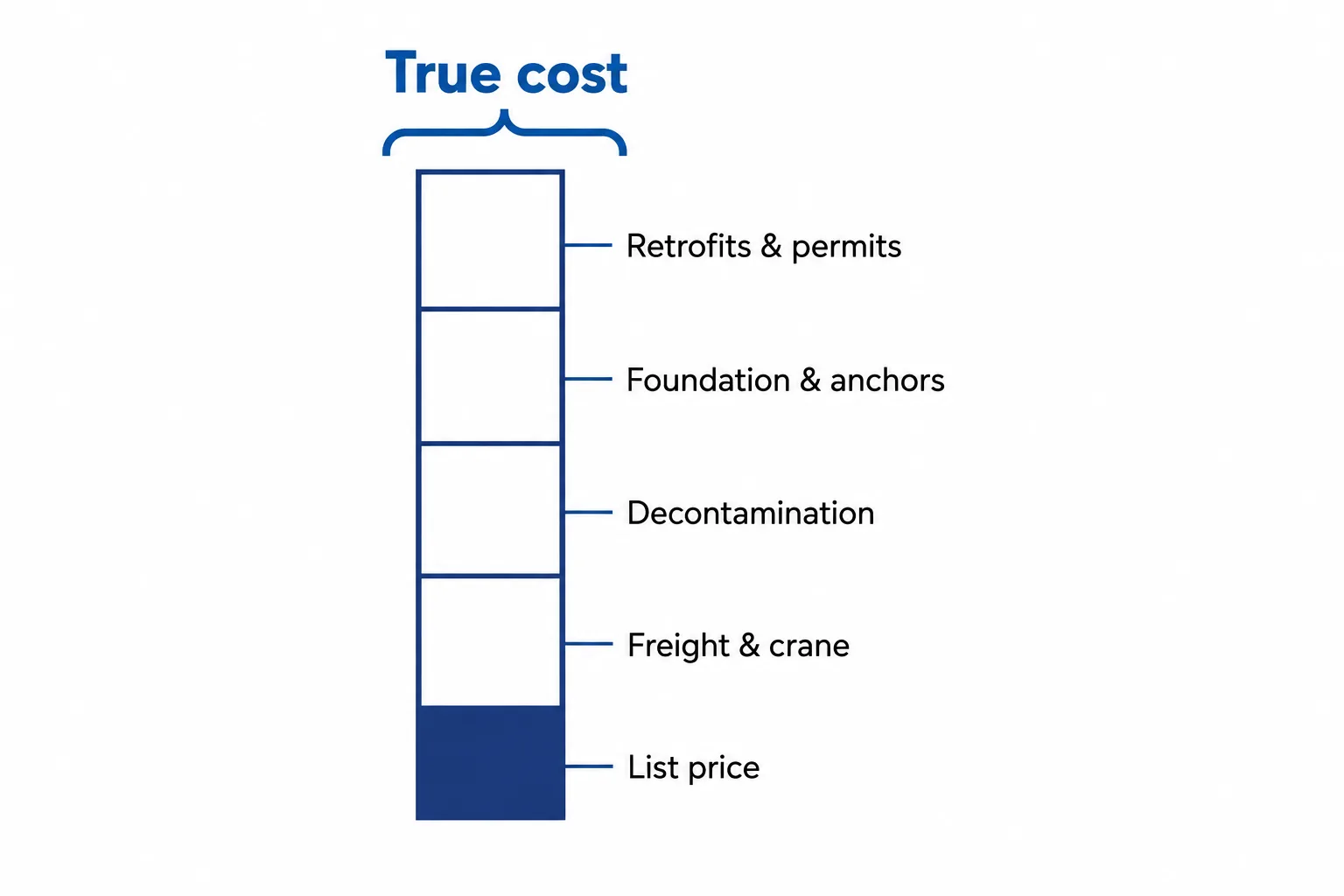
Decontamination comes first. Solvent residue and pesticide rinsate usually count as regulated waste, and disposal falls on the buyer. Foundation, anchorage, and wind or seismic tie-down follow at the new pad.
Obsolete explosion-proof components are the quiet budget killer: once parts leave production, you replace the whole assembly. Then come ventilation or containment retrofits, placards, and SDS-driven segregation. Custom modular construction adapts a structure to one site and one chemical profile, which is the honest comparison to run before you spend heavily on a retrofit.
Used vs New: Straight Comparison
| Criteria | Used | New |
|---|---|---|
| Lead time | Immediate if on a yard | Build slot |
| Spec match | Whatever the seller had | Exact footprint and class |
| Fire rating certainty | Label-dependent | Verified |
| Documentation | Often incomplete | Transferable |
| Warranty | None | Yes |
| Expandable layout | Rare | Standard |
One pre-owned shell rarely fits a larger site plan. Multi-unit or oversized requirements point toward modular hazardous material storage solutions instead of the surplus market.
Frequently asked questions
Is a used hazmat storage building still NFPA compliant?
How do I decontaminate a unit that held solvents or pesticides?
Do I need a 2-hour or 4-hour fire rating?
Are used blast resistant buildings worth considering?
The Practical Takeaway
A used unit is a bet on another operator’s specification and maintenance discipline. Sump condition, electrical classification, and paperwork decide whether the discount is real. Price the full landed and compliant cost first, then hold it against a new build quote.