
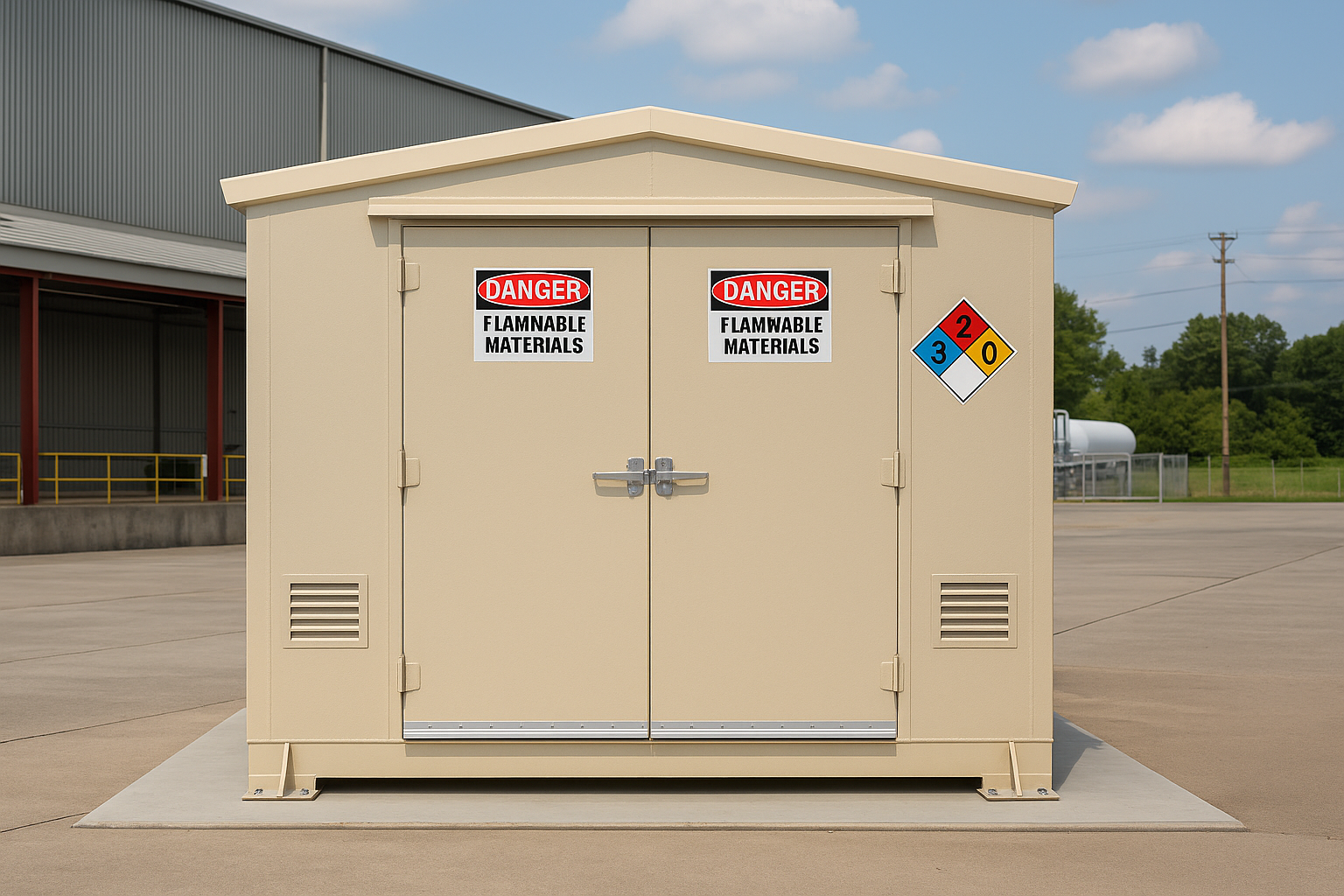
When dealing with flammable or combustible materials, the line between safety and catastrophe can be thin. Fire-rated construction reduces the consequences of an incident, but preventing ignition in the first place means understanding the grounding and bonding requirements for flammable liquids handled inside these buildings. Fire-rated hazardous storage buildings are designed to give businesses the crucial buffer they need to protect employees, property, and the environment. If you’re weighing whether to site those materials away from occupied structures, our guide to the outdoor storage of flammable liquids walks through the code requirements, spacing rules, and containment considerations involved.
1. What Makes a Building “Fire-Rated”?
A fire-rated structure is engineered and tested to withstand fire exposure for a specific period — typically two or four hours. A fire-rated structure is engineered and tested under ASTM E119 fire tests to withstand fire exposure for a specific period — typically two or four hours. If you’re weighing which rating your site actually needs, our guide comparing 2-hour and 4-hour fire ratings breaks down how setback distances, material classes, and local codes drive that decision. As shown in a study on smoke barrier facilities and fire evacuation, this containment helps prevent the spread of flames, smoke, and heat, giving emergency personnel valuable response time. Beyond the fire rating itself, facility managers should understand the specific building requirements for flammable liquid storage that govern ventilation, containment, and separation distances. Fire ratings are one piece of a larger picture, and modular chemical storage buildings for hazardous material compliance combine that protection with the flexibility to adapt as your storage needs change. Not all ratings work the same way, though — understanding the difference between uni-directional and bi-directional fire ratings is key to specifying the right building for your hazmat storage.
2. Code Compliance and Certification
3. Benefits Beyond Compliance
- Protection for personnel and nearby structures
- Reduced insurance liability
- Long-term durability under harsh industrial conditions
Conclusion:
Whether your operation needs a 2-hour uni-directional or 4-hour bi-directional fire-rated building, Safety Storage provides code-compliant, turnkey solutions that deliver peace of mind and unmatched protection.