

Article summary: A 2 hour fire rated building resists direct fire for two hours before the assembly fails; a 4 hour fire rated building doubles that endurance for higher-hazard materials. This guide compares the two ratings for hazardous material storage, how construction and cost differ, and which codes decide the choice.
Facility managers who compare a 2 hour vs 4 hour fire rated building usually face one practical question: does the material inside justify the extra mass, cost, and footprint of the longer rating? The answer follows the hazard, the code, and the site, not the price tag alone. This comparison breaks down both ratings so you can match the structure to what you store.
What Does a Fire Rating Actually Mean?
A fire-resistance rating is the tested time an assembly holds back fire before it fails structurally or lets heat pass to the protected side. Laboratories measure it with a standardized furnace test, most often ASTM E119 or the equivalent UL 263, published by ASTM International.
A 2 hour fire rating means the wall, roof, door, and penetration assembly survived two hours of that exposure. A 4 hour fire rating means it endured four. The number describes the whole assembly, not one panel or coating. Swap a rated door for an ordinary one and the rating no longer holds.
2 Hour vs 4 Hour Fire Rated Building: The Core Difference
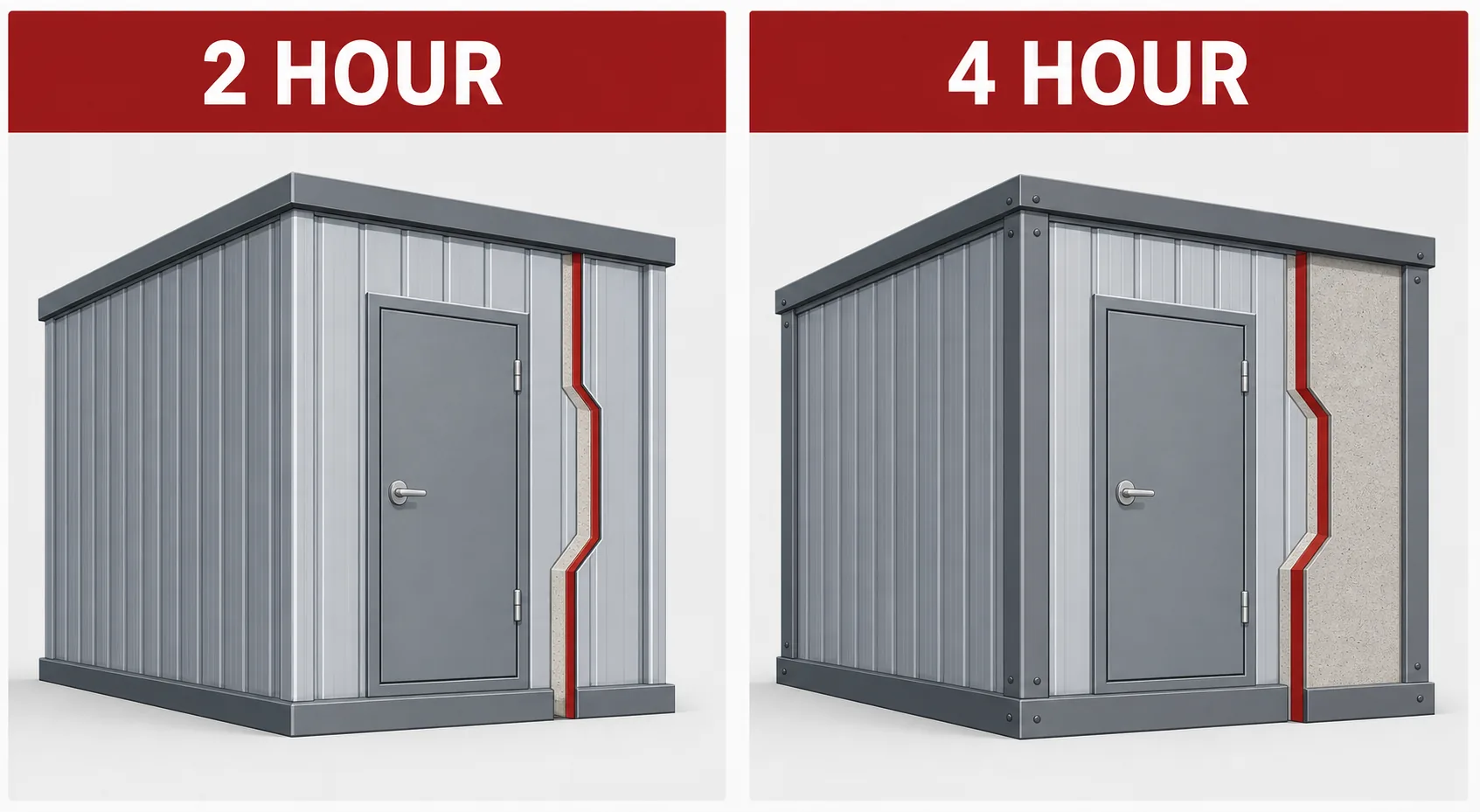
The gap between the two comes down to endurance and the construction needed to reach it. A 4 hour assembly carries more mass, thicker insulated cores, and heavier rated openings, which raises weight, cost, and setback demands.
| Attribute | 2-Hour Rated Building | 4-Hour Rated Building |
|---|---|---|
| Fire endurance | 2 hours | 4 hours |
| Typical wall construction | Insulated steel panel, moderate core | Heavier panel, denser fire-resistive core |
| Relative wall thickness / mass | Lower | Higher |
| Typical hazmat use case | Lower-volume flammables | High-volume flammables, higher liability |
| Relative cost | Lower | Higher |
| Siting / setback | Shorter separation allowed | Often closer siting permitted at higher cost |
When Two Hours Is Enough
Lower storage volumes, tighter budgets, and generous property lines often point to a 2 hour structure. Under many code minimums, a two-hour separation lets an authority treat adjacent spaces independently. A 2-hour uni-directional fire-rated hazardous storage building suits sites where the fire threat runs mainly one direction, such as an external exposure.
When You Need the 4-Hour Rating
High flammable volumes, close proximity to occupied structures, and elevated liability push toward four hours. Storage quantity drives much of this decision, a principle reflected in NFPA 30 from the National Fire Protection Association. For those cases, a 4-hour bi-directional fire-rated hazardous material storage building delivers the longer margin.
How Fire-Rated Storage Buildings Are Built
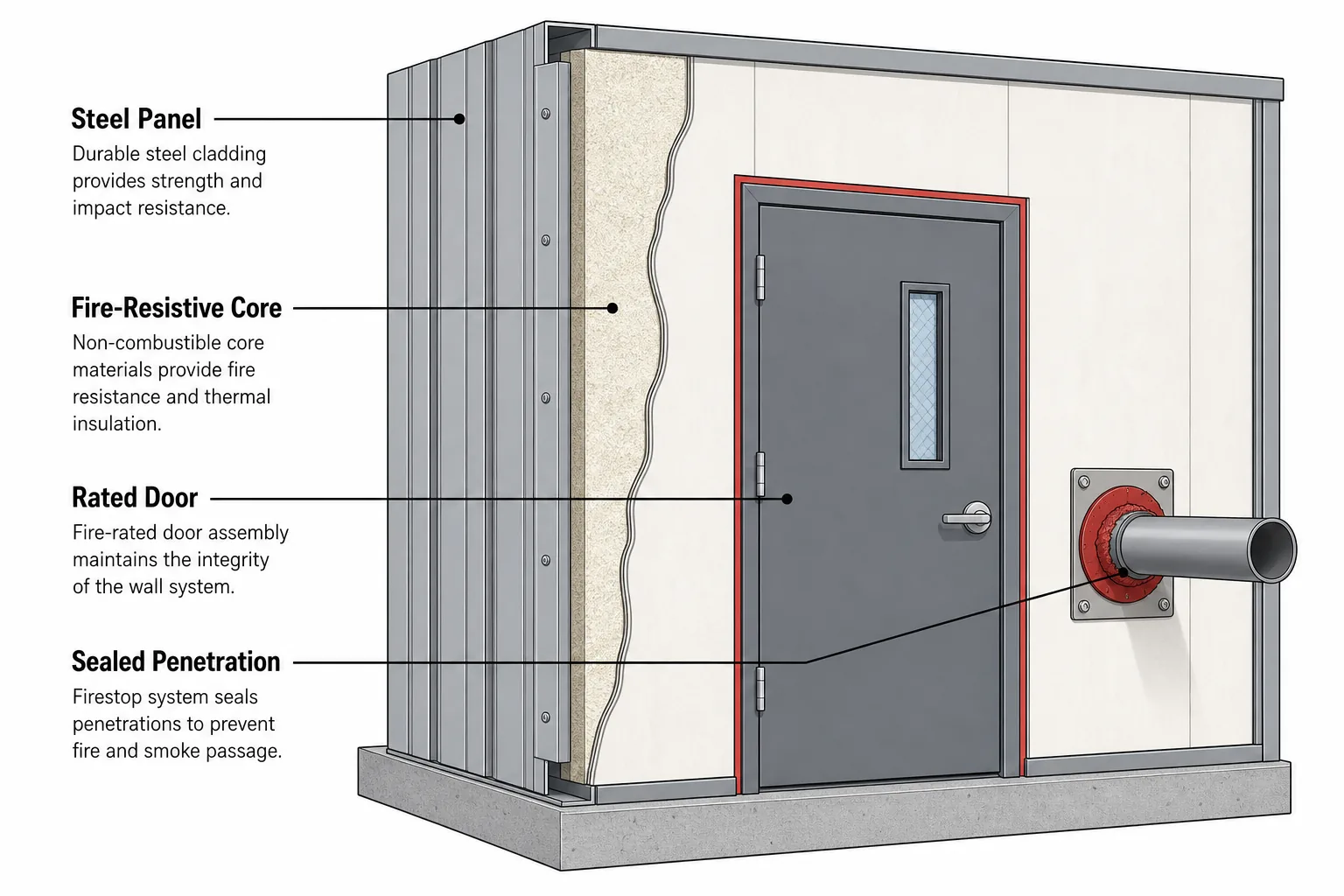
The reason 4 hour units cost more is physical. More endurance requires greater mass, thicker insulated panels, and rated doors and penetrations that hold the same duration as the walls. A fire-rated building performs only as well as its weakest opening.
A fire-rated building performs only as well as its weakest opening.
Uni-Directional vs Bi-Directional Fire Protection
Direction matters as much as duration. Uni-directional protection resists fire from one side, typically an outside exposure. Bi-directional protection works both ways: it contains a fire that starts inside among the stored materials and resists one that approaches from outside. A 2-hour bi-directional fire-rated hazardous material storage building is a common choice for reactive or flammable stock. These assemblies follow requirements set out by the International Code Council in the IBC.
Codes, Compliance, and Location (Including Florida)
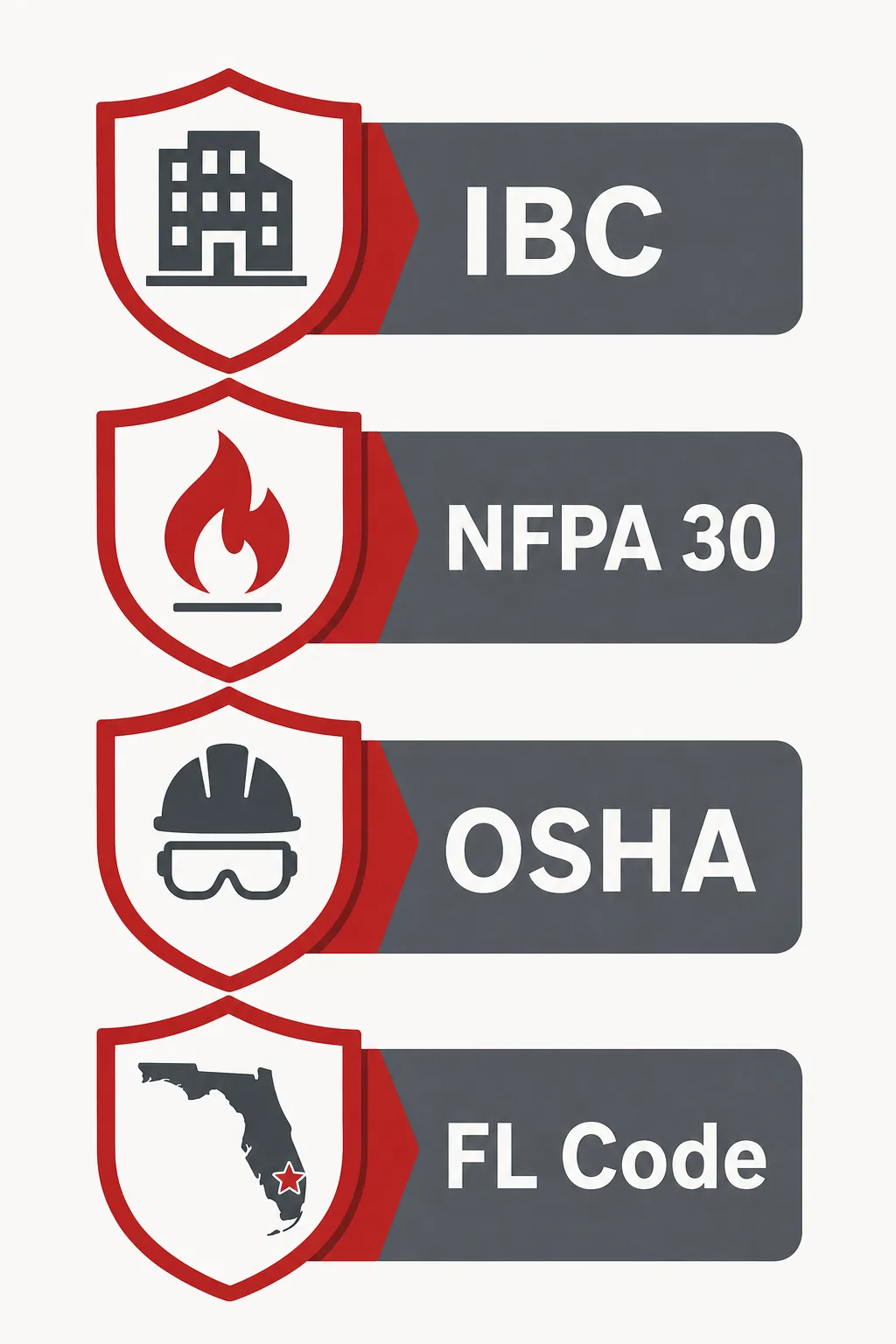
Your rating is rarely a free choice. The IBC ties it to occupancy type and required separation, while workplace flammable-liquid rules under OSHA standard 1910.106 and hazardous waste rules under the EPA’s hazardous waste program shape how and where you store material. Your local authority approves the final design.
Location adds weight to the decision. A rated unit in Florida also answers to the Florida Building Code and its high-wind and hurricane load provisions, so it must satisfy both fire and structural criteria. Buyers who need documentation often request UL 2-hour fire-rated wall assembly listings to verify the design before a local review.
Fire Rating in the Full Hazmat Lifecycle
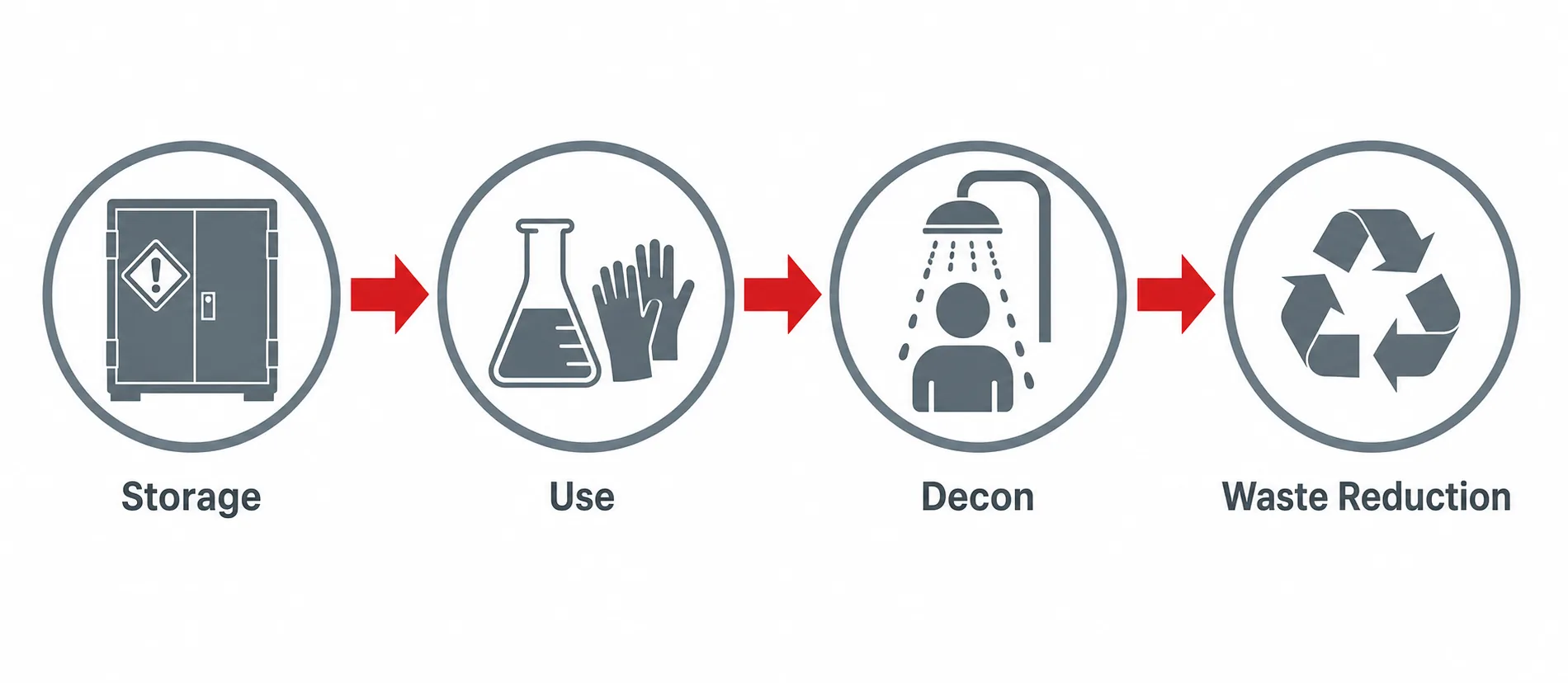
A rated building is one link in the chain. Hazardous material moves from storage to use, decontamination, and rinsate management, then to waste volume reduction. The fire rating protects the front end while downstream equipment handles what the material becomes.
It also helps to separate two protections buyers often conflate. Blast-resistant units defend against overpressure; fire-rated units defend against heat and flame. A site with both risks needs both features specified, not one assumed to cover the other. Once flammable or contaminated waste leaves storage, compaction and filtration systems reduce its volume and contain residue.
Frequently asked questions
What does a 2 hour fire rating mean?
What is a 4 hour fire rating?
What is the difference between a 1 hour and a 2 hour fire-rated wall?
Is a 2 hour or 4 hour rated building better for flammable liquid storage?
Does Florida require a specific fire rating for hazmat storage?
The Bottom Line
The choice between ratings follows the hazard, the code, and the site, not the budget by itself. Match the fire endurance to what you store, verify the assembly and its openings carry the same rating, and confirm the design with your local authority. That conversation goes faster when you know how the day runs, so our walkthrough of verifying fire ratings at inspection covers the documents and assembly details raised on site. A purpose-built fire-rated hazardous material storage building, specified to the right duration and direction, protects both your inventory and everyone near it.