
Article Summary: The Short Answer
The welded vs bolted chemical storage building choice comes down to one question: how much do you trust your seams?
Welded steel units join walls, floor and sump with continuous welds, so liquids and vapors have no gasket to slip past.
Bolted panel units go up fast and can be repaired panel by panel. The catch is that every lap joint depends on a gasket or sealant that needs upkeep.
Four factors decide it: what you store, how strict your containment needs are, whether the unit may move, and total cost across its service life.
How Each Construction Method Works
This guide covers hazmat storage buildings, safety storage buildings and flammable storage buildings. Tanks and silos follow different design rules, so we leave them aside.
Welded Steel Construction
Fabricators cut and form steel sheet and structural members, then join them with continuous seam welds into one shell, one floor and one sump. Structural welds on buildings are made to a structural weld code by qualified welders.
The result is a monolithic box of non-combustible steel construction with no soft seals in the structural joints.
Bolted Panel Construction
Bolted units use pre-punched steel panels, high-strength fasteners and a gasket or sealant strip at each lap. Mechanical crews assemble them on site with hand and power tools, so no certified welders are needed.
The trade-off: each fastener hole and each panel lap is a possible path for vapor or liquid.
Welded vs Bolted Chemical Storage Building: Side-by-Side Comparison
Related readingPharmaceutical Chemical Storage Building: Buyer’s GuideRead the guide →| Factor | Welded steel | Bolted panel |
|---|---|---|
| Seams and leak paths | Continuous, no gaskets | Gasket or sealant at every lap and bolt |
| Sump integrity | One-piece, no joint under the liquid | Floor and wall-base joints need a seal |
| Structural rigidity | High, full steel section | Good, joints allow some flex |
| Fire-rating path | Fewer gaps to detail | Joints and penetrations need fire seals |
| Relocation | Moves intact by crane or forklift | Take apart, move, reassemble, reseal |
| Repair | Cut and weld (hot work) | Unbolt and swap a panel |
| Site labor | Placement and hookup | Erection crew on site |
| Upkeep | Low, mainly coat touch-up | Periodic gasket checks and reseal |
| Upfront cost | Competitive for standard sizes | Can be lower for very large footprints |
| Life-cycle cost | Lower upkeep | Gaskets, inspection and leak risk add up |
For liquid chemicals, welded wins on containment. For very large, dry or phased projects, bolted wins on flexibility.
Seams and Leak Paths: Where Chemical Storage Fails First
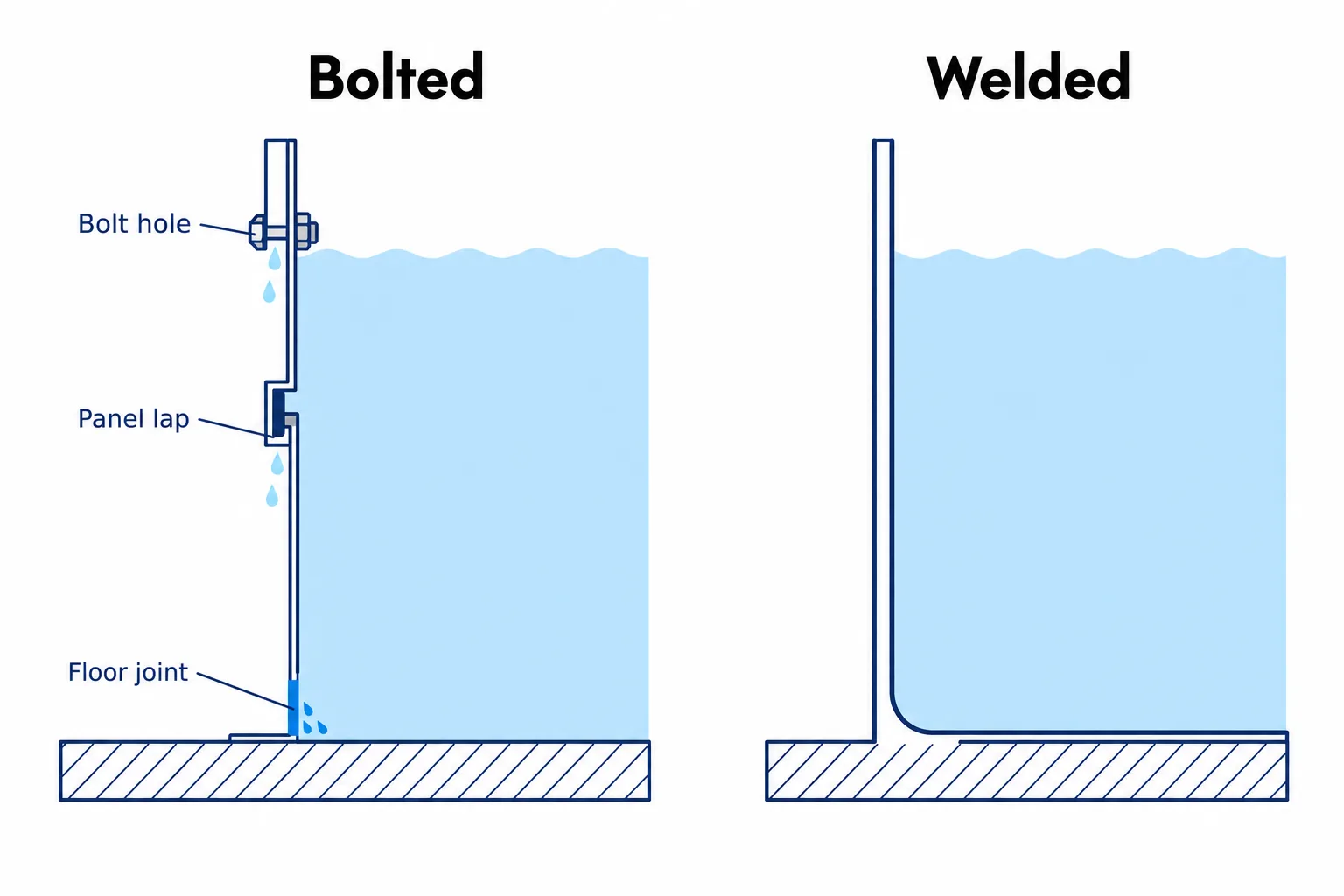
A gasket has to resist every chemical in the room, not just the main one. Solvents can swell elastomers, strong acids and caustics can harden or crack them, and oxidizers attack many sealants. Change your inventory and you may need a new gasket spec.
Leaks tend to start at three points: fastener penetrations, panel laps and the wall-to-floor joint. The last one matters most, because it sits under the liquid.
A continuously welded floor sump removes that joint entirely. It is the same approach used in a prefabricated laboratory chemical storage building, where the sump sits below a heavy-gauge steel shell.
Secondary Containment Integrity
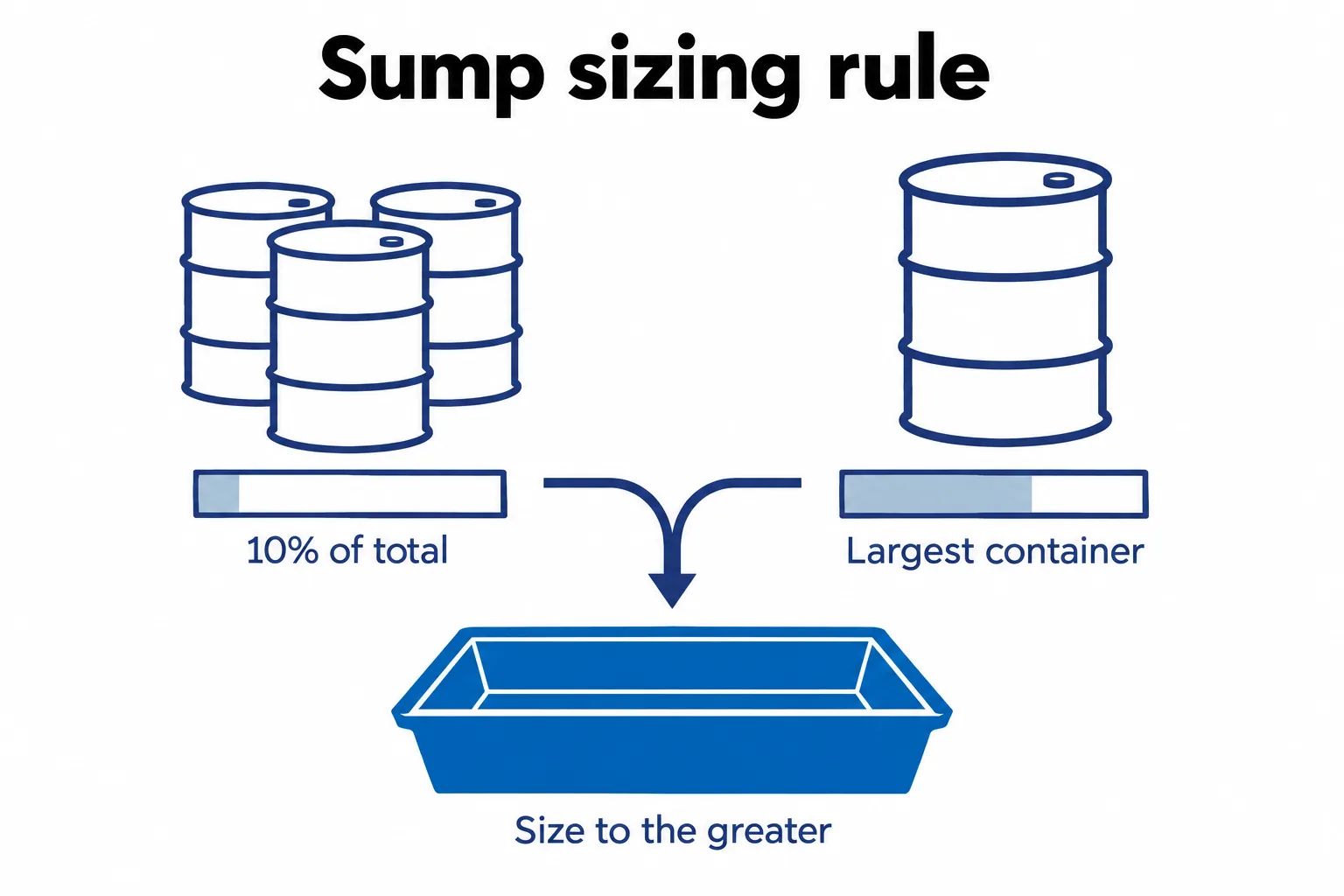
Sump size is a regulatory question as well as a design one. For hazardous waste container storage areas, the EPA containment rule in 40 CFR 264.175 requires the containment system to hold 10% of the volume of containers or the volume of the largest container, whichever is greater.
Flammable liquid rooms add another check. Ask your fire code official or safety consultant whether wall-to-floor joints must be liquid-tight for your occupancy.
A welded sump has no joint to inspect or reseal. A bolted sump needs joint checks on a set schedule, plus reseal work as gaskets age.
Rinsate from drum cleanout and spill residue can stand in the sump until someone pumps it out. That standing liquid is the hardest test a gasket faces.
Strength, Relocation and Lifespan
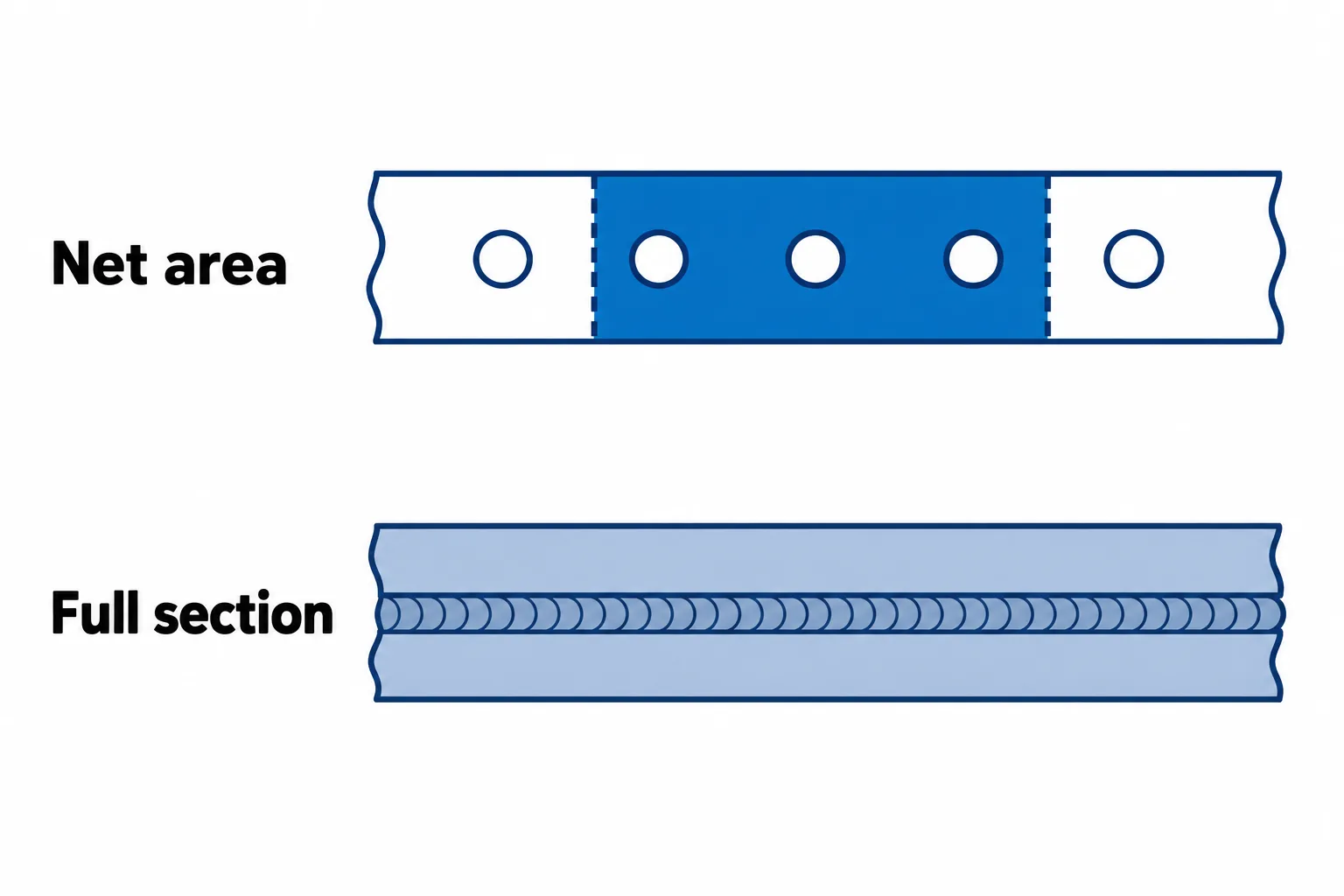
Bolt holes remove steel. Structural design checks bolted tension members on net area, the section left after holes are deducted, while a full-penetration weld keeps the whole cross-section working.
In a welded vs bolted chemical storage building comparison, relocation is where the gap shows. A crane lift or forklift move puts racking loads on the frame. Continuous welds resist those loads, while light-gauge bolted joints can loosen and break the seal.
Bolted joints do have one upside: a little flex under wind loads, which suits large field-built structures.
Gauge, coatings and material choice also drive service life. Our hazmat storage building lifespan guide covers those variables in detail.
Modularity and Future Expansion
Bolted designs let you add bays or take the structure apart for a move. Welded modular units take a different route: the whole unit moves intact by crane or forklift, with no reassembly and no reseal.
For more on layout changes and phased growth, see the benefits of modular chemical storage buildings.
Repair and Modification
| Bolted | Welded | |
|---|---|---|
| Method | Unbolt the damaged panel, fit a new one, replace the gasket | Cut and patch |
| Crew | Hand tools | Qualified welders |
| Fire safety | No flame, no sparks | Counts as hot work. OSHA 29 CFR 1910 Subpart Q: relocate combustibles at least 35 feet where practicable, or protect them with flameproofed covers, with fire watches where required |
| In an active hazmat building | Work can proceed | Expect to remove stored chemicals first |
From an engineering perspective, the fix is simple: plan doors, vents, shelves and penetrations at order time so nobody has to cut steel later.
Fire-Rating Implications
Both methods use non-combustible steel. A fire rating, though, belongs to a tested wall or roof assembly, not to the joint method alone. Ask any supplier which tested assembly backs a claimed rating.
Joints and penetrations are where fire seals must hold. Continuous welds leave fewer gaps to detail. Bolted laps need seals suited to both fire exposure and the stored chemicals.
Welded vs Bolted Chemical Storage Building Price and Total Cost
There is no single price answer, and bolted is not always cheaper. For very large field-erected footprints, bolted panels can cost less upfront. For standard sizes, a welded prefab unit arrives ready to place, which cuts site labor.
Life-cycle cost tells more of the story. Count gasket replacement, inspection hours, downtime after a leak, cleanup cost, and resale or relocation value. A quote that ignores those lines is only half a quote.
Verdict by Use Case
Use this table to settle a welded vs bolted chemical storage building decision by situation.
| Situation | Better fit | Why |
|---|---|---|
| Flammable liquids, corrosives, mixed hazard classes | Welded | Continuous seams, no gaskets |
| Drums, totes or other containers stored over a sump | Welded | One-piece sump with no joint under the liquid |
| Unit may be moved later by crane or forklift | Welded | Moves intact, nothing to reassemble or reseal |
| Low upkeep, few joints to inspect | Welded | Upkeep is mainly coat touch-up |
| Footprint too large to ship as modules | Bolted | Assembled on site by an erection crew |
| Dry goods or storage with low liquid risk | Bolted | Little liquid to leak through a seam |
| Phased expansion | Bolted | Add bays or take the structure apart later |
If you have not yet chosen between a factory unit and an engineered one-off, the prefabricated vs custom hazmat storage building guide covers that procurement decision.
Frequently asked questions
What are the disadvantages of welded connections?
What are the advantages of welded connections?
What welding is used for buildings?
Is a bolted hazmat storage building liquid-tight?
Can a welded chemical storage building be relocated?
Final Takeaway
For chemical containment, welded seams remove the leak paths that bolted panels can only manage through maintenance. Pick bolted where size, phased growth or dry storage drive the project.