

Summary: A locker suits smaller volumes and tight footprints; a storage building offers walk-in capacity, climate control, and heavier fire or blast ratings for larger inventories. This guide compares capacity, fire rating, siting, cost, and compliance so you can match the unit to your hazard class and defend the purchase internally.
Chemical Storage Locker vs Storage Building: The Short Answer
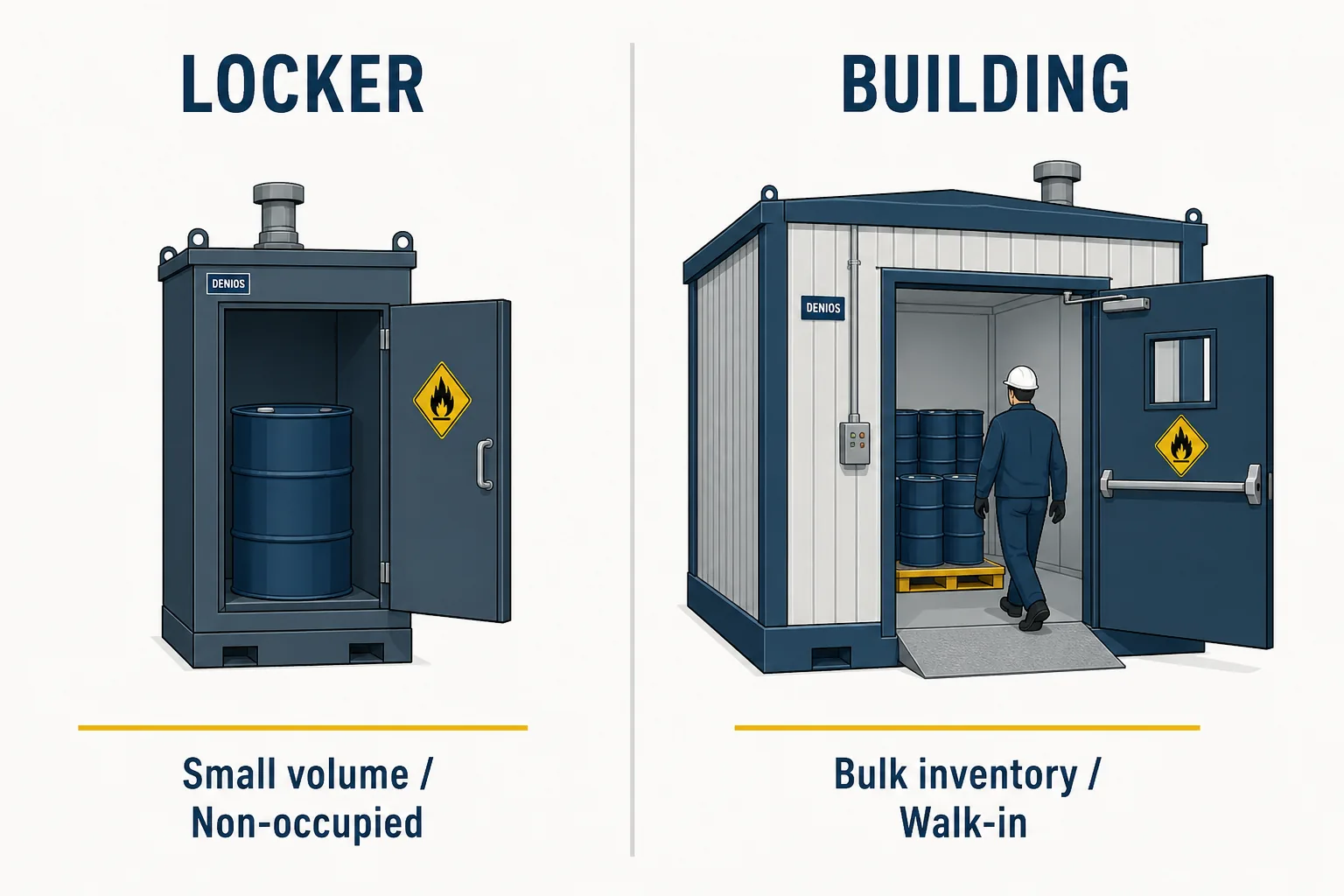
The choice comes down to scale and personnel access. A locker is a compact, non-occupied outdoor enclosure for drums and small containers. A building is a walk-in structure that holds larger inventories and lets staff enter to work. Both segregate incompatible chemicals and control ventilation, a core principle echoed in the University of Wisconsin–Madison chemical storage guide.
| Factor | Chemical Storage Locker | Chemical Storage Building |
|---|---|---|
| Capacity | Small to mid drum counts | Pallet-scale, bulk inventory |
| Personnel access | Non-occupied, reach-in | Walk-in occupancy |
| Fire rating options | Standard fire-rated | Up to multi-hour rated |
| Climate control | Limited | Full HVAC available |
| Siting | Detached, small pad | Detached, larger pad |
| Typical use | Flammables, corrosives | Mixed hazmat programs |
What Is a Chemical Storage Locker?
A chemical storage locker is an engineered outdoor enclosure built to hold flammables, corrosives, and small drum counts away from occupied structures. Most models are non-occupied, so staff load and retrieve from the outside rather than walking in. Forklift pockets let crews reposition the unit as a site layout changes. Lockers work well when volumes stay modest and floor space is scarce.
Storage Unit vs Storage Locker: What’s the Difference?
A storage unit is generic rentable space with no hazard controls, the kind used for furniture or records. A chemical storage locker is a purpose-built, fire-rated, ventilated hazmat enclosure with spill containment. The distinction matters: self-storage units carry no chemical rating and cannot legally hold hazardous inventory.
Self-storage units carry no chemical rating and cannot legally hold hazardous inventory.
What Is a Chemical Storage Building?
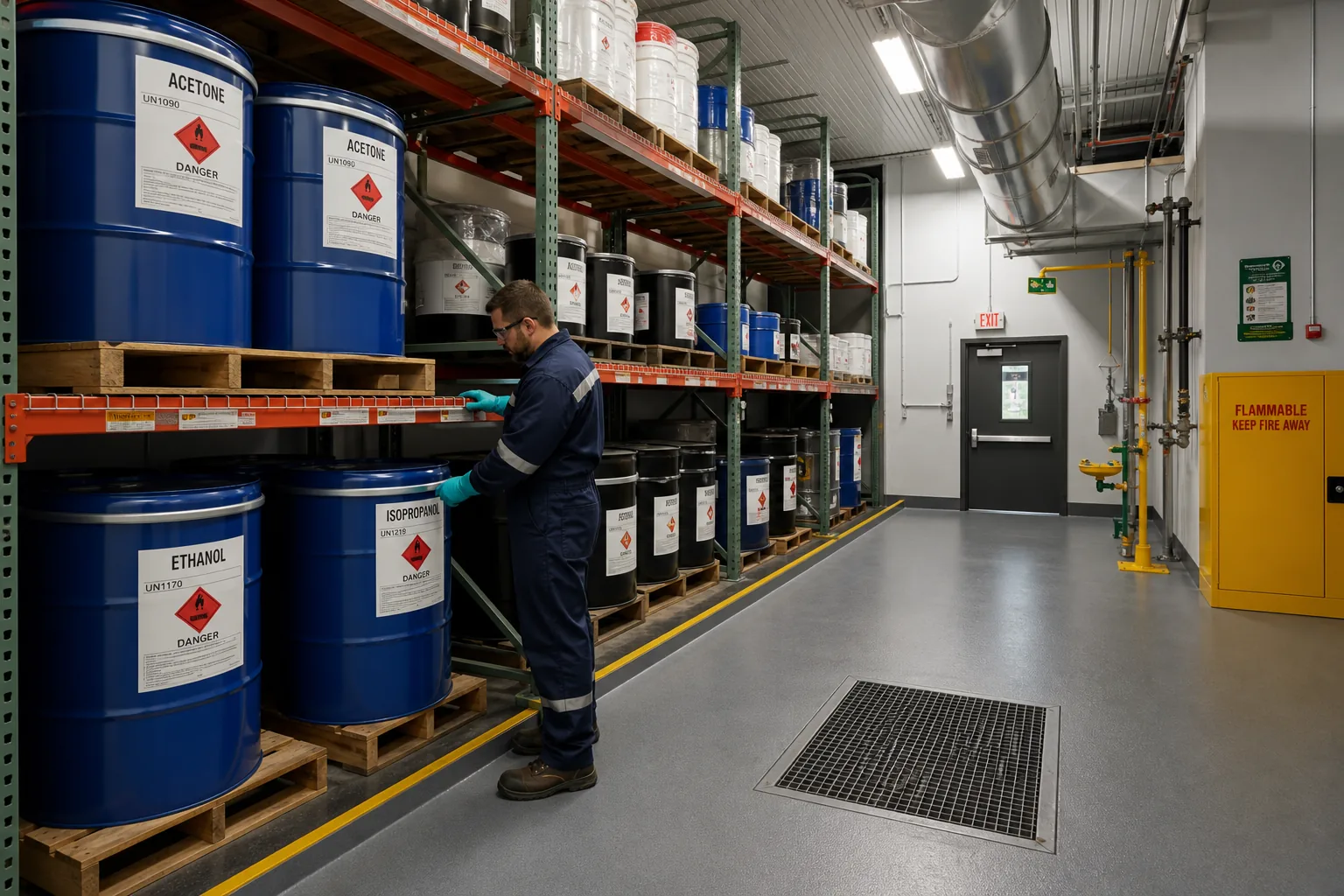
A chemical storage building is a walk-in structure sized for larger hazmat programs. Staff enter to stage, inspect, and pull materials, so occupancy, lighting, and ventilation are engineered accordingly. Configurations range from prefabricated shells to custom hazardous materials storage buildings with racking, HVAC, and multi-hour fire ratings. These buildings scale as inventory grows.
For flammable-heavy programs, fire-rated storage buildings add a tested barrier between stored product and the surrounding site.
When a Fire-Rated Storage Building Is the Right Call
Once flammable or combustible volumes climb, a rated barrier becomes the practical choice. A 2-hour assembly buys time for evacuation and fire response. Units such as 2-hour bi-directional fire-rated hazardous material storage buildings resist fire spread from both inside and outside the structure, which matters when the building sits near other operations.
Head-to-Head: Capacity, Fire Rating, Siting, and Cost
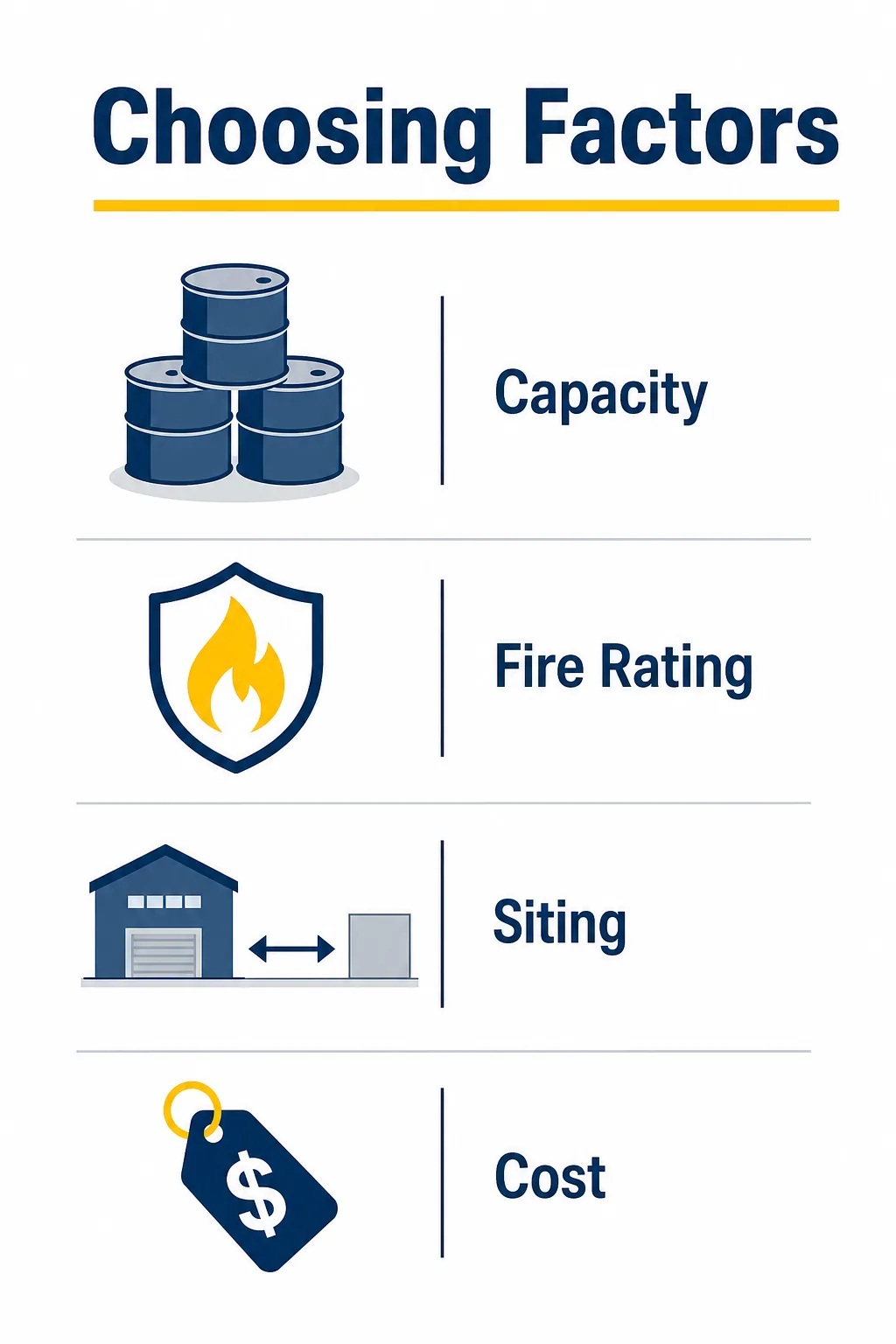
Volume drives the first decision. Small quantities often fit a locker or even a cabinet, while bulk drum inventories justify a building. The NIH Office of Research Services fact sheet on chemical storage cabinets outlines the volume limits that push storage from cabinet scale toward outdoor lockers and buildings.
Occupancy is the next split: lockers stay non-occupied, buildings support entry. Both should sit at a set separation distance from occupied structures. Temperature-sensitive product may require climate-controlled construction for temperature-sensitive chemicals, which favors a building. Cost tracks size, rating, and options rather than the label alone.
Secondary Containment and Rinsate: Don’t Overlook Spill Capture
Spill capture is easy to underspecify. Sumps and containment floors hold leaks until crews respond, and containment capacity should match the largest single container plus a margin. Collected rinsate, the wash-water left after cleaning drums or equipment, counts as regulated liquid and needs its own capture and disposal path, not a floor drain.
Beyond Fire Rating: Blast-Resistant Storage Options
Some sites store volatile product near ignition sources or process hazards. There, blast-resistant buildings form a third tier above the standard fire-rated shell. They use reinforced walls to resist overpressure, not just flame. A standard fire-rated building covers most flammable inventories; blast protection is warranted when an explosion, rather than a fire, is the credible event.
OSHA and Compliance: What Regulators Expect
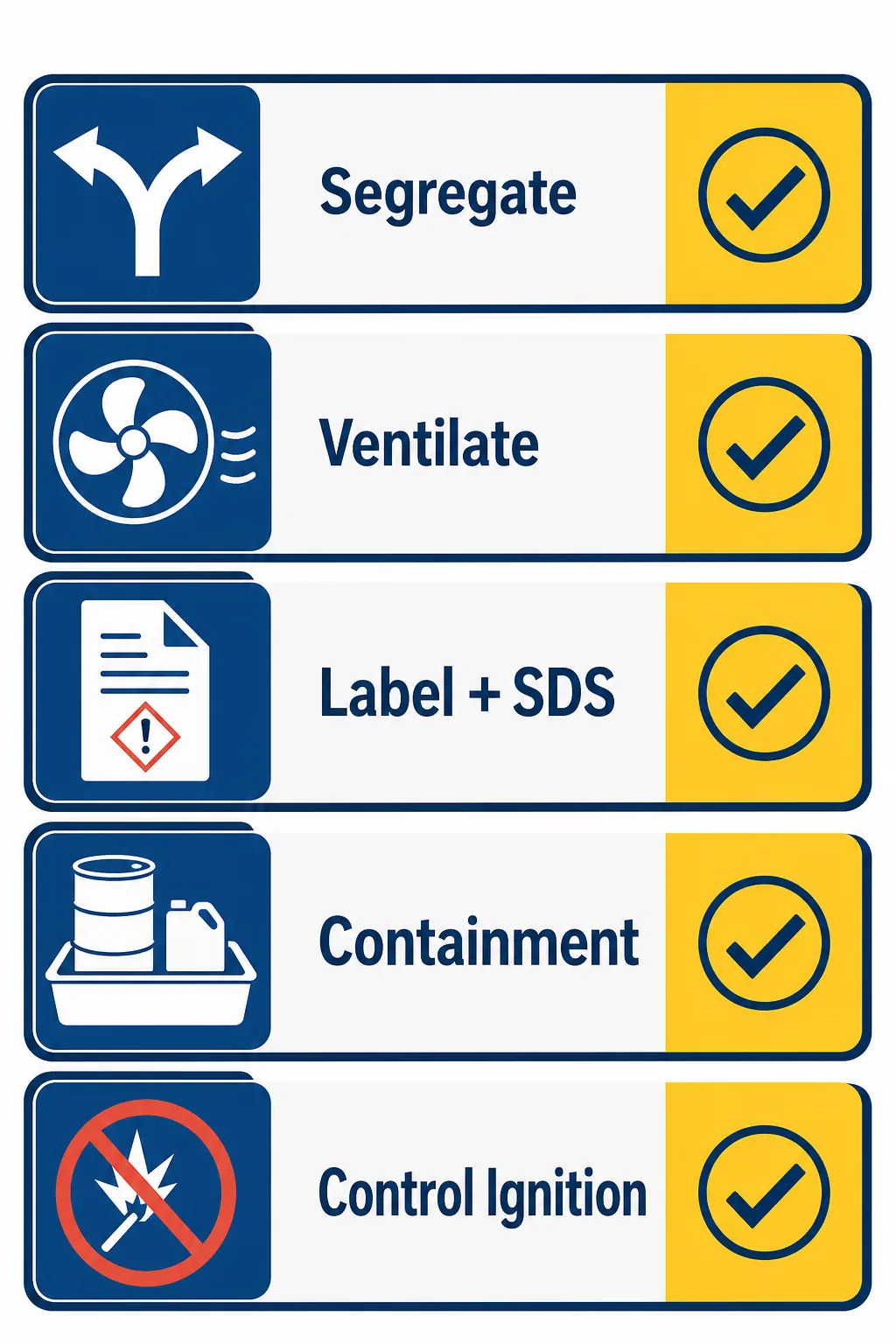
OSHA and recognized safety guidance point to a consistent checklist for chemical storage:
- Segregate incompatible chemicals so acids, bases, oxidizers, and flammables stay apart
- Ventilate to control vapor buildup
- Label containers per GHS and keep Safety Data Sheets accessible
- Provide secondary containment for leaks and spills
- Control ignition sources near flammables
The SMU Risk Management chemical storage resource frames these segregation and containment expectations in plain terms. If a site visit is on the calendar, our guide to what inspectors check during a walkthrough sets out the order reviewers typically move through a locker or a building.
Where Is the Best Place to Store Chemical Containers?
The best location is an outdoor, detached, ventilated enclosure separated from occupied buildings, with containment underneath and temperature control matched to the product. That description fits both a locker and a building, so the right pick returns to volume, occupancy, and hazard class.
Choosing Between a Locker and a Building: A Decision Framework
Run the decision against five criteria:
- Choose a locker when volumes are small to moderate, no one needs to walk in, footprint is tight, and the budget is lean.
- Choose a building when you hold bulk inventory, staff must enter, product needs climate control, fire or blast exposure is high, or your program will grow.
Match the criteria, not the marketing label, and either format can meet code.
Frequently asked questions
What are the three main types of storage facilities?
What is the difference between a storage unit and a storage locker?
Can chemical storage buildings be climate controlled?
What fire rating do I need for flammable chemical storage?
How is rinsate or spill runoff handled in outdoor chemical storage?
Closing Takeaway
The right hazmat enclosure follows your numbers: volume, occupancy, climate needs, and hazard class. A locker earns its place on tight sites with modest inventory; a building carries larger, occupied, or growth-bound programs and takes fire or blast ratings when the risk demands them. Both meet code when specified correctly, and Safety Storage builds either to fit the load you actually store.